TRIPPIN' AUDIO | Website
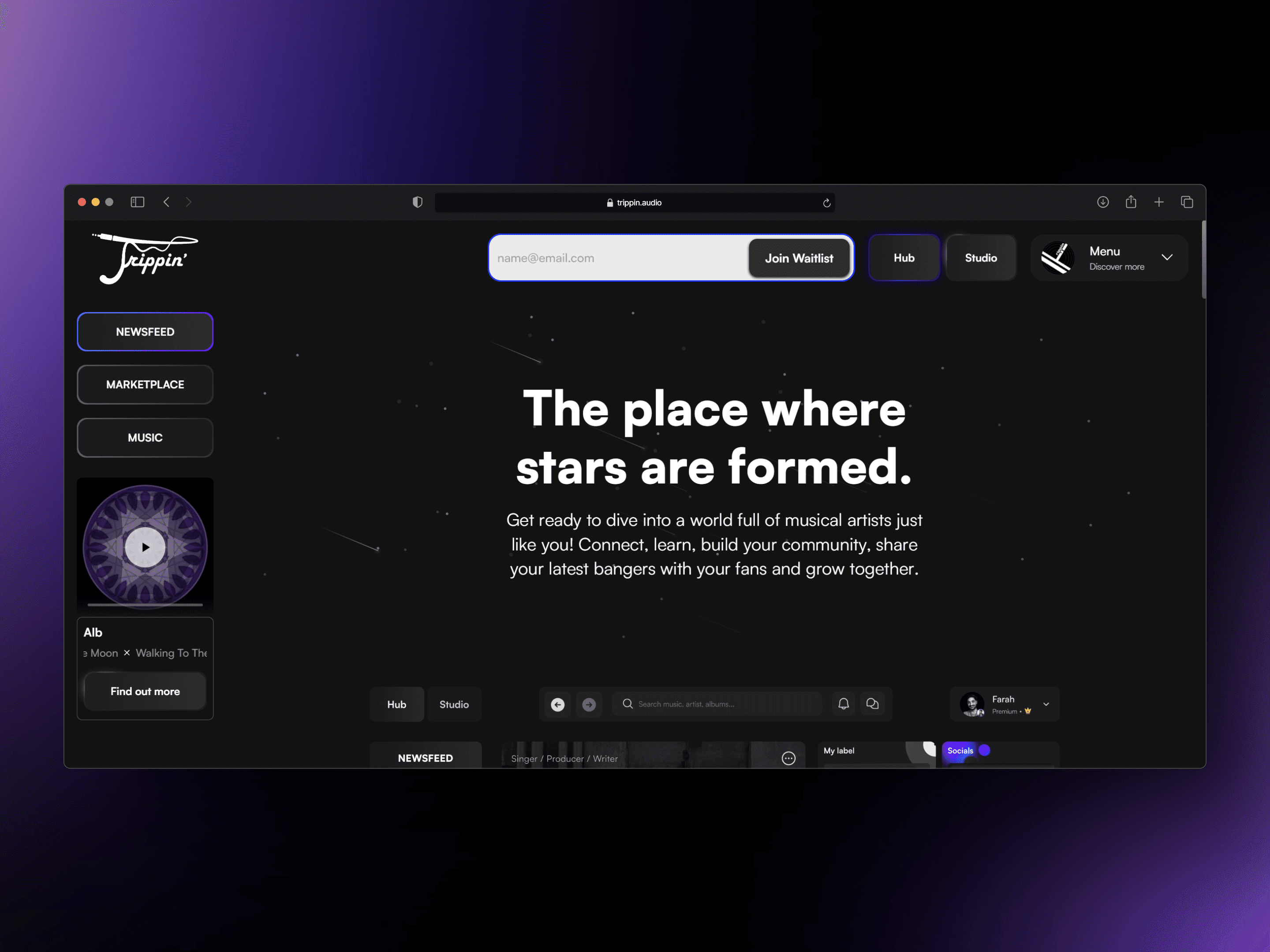
The Place Where Stars Are Formed.
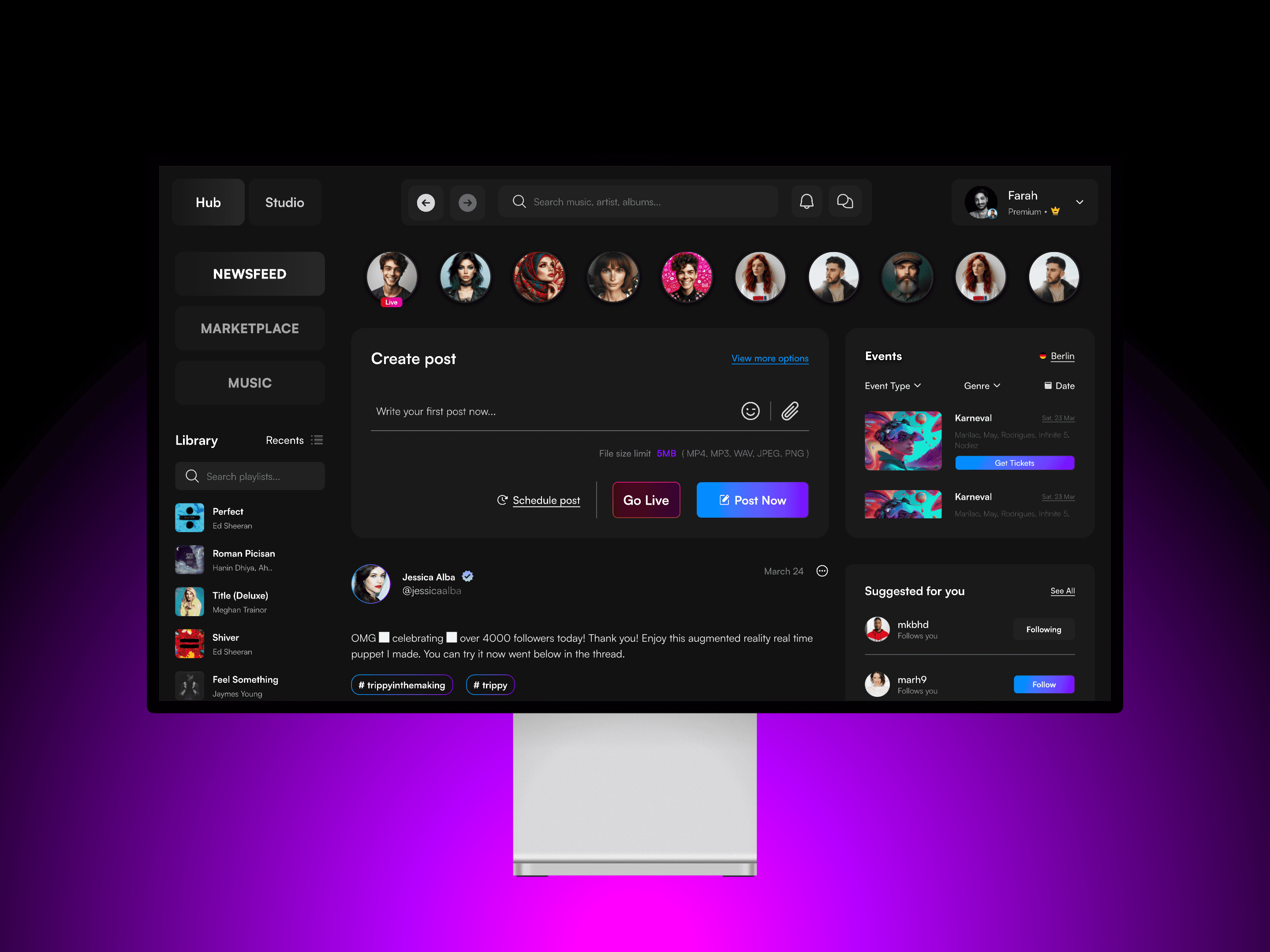
Trippin' Audio is a groundbreaking all-in-one platform designed to empower artists at every stage of their musical journey. From bedroom producers to chart-topping superstars, Trippin' Audio provides the tools, connections, and opportunities needed to create, collaborate, and thrive in today's dynamic music landscape.
My Role
Product Designer and Product Developer
Team
N/A
Timeline
Ongoing
Tools
Figma, Framer, Loops, LottieLab, Rive.
Background
Trippin' Audio is more than a platform; it's a movement. We're committed to nurturing talent, fostering innovation, and creating a more equitable music industry. Whether you're taking your first steps in music production or planning your next world tour, Trippin' Audio is your all-in-one solution for success in the modern music landscape.
Methodologies
Double Diamond Strategy
Discover - Conducted extensive market research, user interviews, and competitor analysis, including immersive Service Safaris to understand how artists and fans engage with existing music distribution platforms like DistroKid, TuneCore, and Bandcamp, as well as social media platforms such as Instagram, TikTok, YouTube, and Twitter/X—the primary channels where artists promote their music and interact with fans.
Define - Identified key challenges such as high distribution costs, fragmented artist-fan engagement, and inefficient monetization tools. Synthesized insights into clear problem statements and opportunity areas, establishing KPIs like user acquisition, engagement rates, and conversion to premium plans.
Develop - Ideated, wireframed, and prototyped multiple design solutions through collaborative design sprints, incorporating feedback from artists, music professionals, and early adopters. Iterated on features like Smartlinks, Live Creator, and Marketplace integration.
Deliver - Implemented a high-performance, accessible, and scalable website using Framer, which leverages React.js and Next.js under the hood. This allowed for server-side rendering (SSR), lazy loading, and other performance optimizations to ensure fast load times and SEO optimization. Additionally, I developed custom TypeScript code for specific interactive components and dynamic content areas, enhancing functionality and user experience. The website seamlessly integrates with the Trippin' Audio Platform & Native Mobile App, providing a unified experience across all touchpoints.
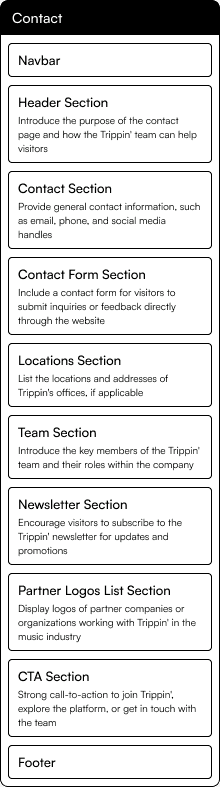
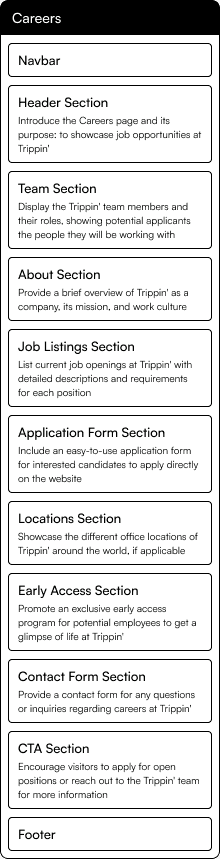
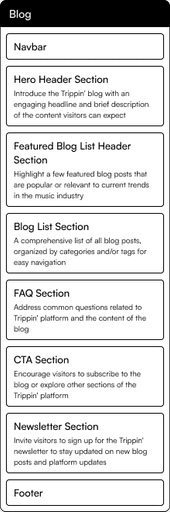
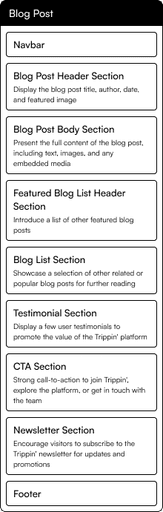
Content Audit & Information Architecture - Executed a detailed content audit that informed a streamlined sitemap and clear user journey, emphasizing conversion paths and brand storytelling.
Problems
Build Brand Trust & Credibility – Establish Trippin’ Audio as a legitimate and innovative platform in the music industry.
Educate Artists & Fans – Provide clear insights into how the platform helps independent artists distribute, promote, and monetize their music.
Drive Platform Sign-Ups – Encourage artists, producers, and fans to register and engage with the Trippin’ Audio ecosystem.
Attract Investors & Partners – Showcase the business model, unique value proposition, and growth potential to secure funding and strategic partnerships.
Boost SEO & Discoverability – Optimize for search engines to ensure artists looking for better music distribution solutions can find Trippin’ Audio organically.
Solution
Trippin' Audio's website establishes the platform's legitimacy and innovation in the music industry by providing comprehensive information on how it assists independent artists in distributing, promoting, and monetizing their music. The site encourages engagement within the Trippin' Audio ecosystem by prompting artists, producers, and fans to register. It also showcases the business model, unique value proposition, and growth potential to attract investors and strategic partners. Additionally, the website is optimized for search engines, ensuring that artists seeking improved music distribution solutions can discover Trippin' Audio organically.
Research & Discovery
Market & Competitive Analysis
This research underscored the need for Trippin’ Audio to offer a centralized ecosystem where artists can create, distribute, promote, and monetize their work without competing for attention in non-music-centric spaces. The platform integrates the best aspects of social engagement while prioritizing music-first discovery, community interaction, and revenue opportunities.
Competitor Analysis
A key insight revealed that music artists struggle to stand out on these platforms, often getting lost in a vast pool of content creators from other industries (e.g., influencers, vloggers, gamers). Unlike niche platforms built for musicians, mainstream social media lacks dedicated tools for music promotion, fan monetization, and direct artist-fan engagement. Additionally, algorithm-driven content distribution makes it difficult for independent artists to gain consistent visibility without heavy reliance on paid advertising or viral trends.

Explanation of Columns
Competitor Name
The name of the competing platform or service.
Category
Classifies the competitor into one of three groups:
Digital Distribution: Platforms focused on distributing music to streaming services.
Promotion & Monetization: Platforms emphasizing music promotion, artist tools, and revenue generation.
Social Media & Content: Platforms where music is shared or discovered alongside other content.
Key Features
Highlights the primary services or tools offered by the competitor.
Strengths
Identifies the competitor's strong points, such as cost-effectiveness, user base, or unique tools.
Weaknesses
Points out areas where the competitor may fall short, such as higher costs, selective acceptance, or limited focus.
Differentiators from Trippin' Audio
Describes how each competitor differs from Trippin' Audio, focusing on aspects like service model, target market, or unique offerings. Trippin' Audio’s strength in analytics and distribution is a key benchmark.
Pricing Model
Details the cost structure, whether it’s subscription-based, one-time fees, commission-based, or free.
Target Audience
Specifies the type of users or artists the competitor primarily serves, such as independent artists, established musicians, or broad social media audiences.
User Research
My research focuses on independent musicians and artists, analyzing their expectations from distribution platforms and identifying areas for Trippin' Audio to differentiate itself.
I conducted research by analyzing web content from blogs, review sites, and forums to gather insights into musicians' experiences with music distribution platforms. My key sources included Trustpilot reviews for platforms like DistroKid and TuneCore, Reddit threads discussing distribution services, and articles from music industry blogs like LANDR and Forbes.
User Needs and Expectations
Musicians using distribution platforms have clear priorities, shaped by their need to reach audiences and monetize their work effectively.
Research suggests the following key needs:
Easy and Affordable Distribution
Musicians need simple access to major streaming platforms like Spotify, Apple Music, and TikTok. For example, DistroKid offers unlimited uploads for $22.99/year, while CD Baby charges a one-time $9.99 per release, catering to different preferences (LANDR Blog: We Reviewed the 11 Best Music Distribution Services). Platforms like Amuse provide free distribution with paid upgrades, appealing to budget-conscious artists (Unchained Music: The Top 10 Free Music Distribution Services for Independent Artists).High Royalty Retention
Keeping a high percentage of earnings is crucial. Many platforms, such as DistroKid and Ditto Music, allow artists to retain 100% of royalties, while CD Baby retains 9%, offering 91% to artists (CD Baby: Music Distribution Services for Independent Musicians). This is a significant factor, as seen in Reddit discussions where users compare royalty rates (r/musicians on Reddit: Music distribution recommendations free or affordable).Promotion and Analytics Tools
Artists value tools for promoting their music and understanding performance. TuneCore offers playlist pitching and social media promotion, while Bandcamp provides direct-to-fan sales with community features (TuneCore: Digital Music Distribution). Reddit users highlight the importance of analytics, with some criticizing DistroKid’s “piss poor” reporting (r/Music on Reddit: I am an independent musician. I publicly published all my earnings reports from all the music distribution platforms so people ...).Good Customer Service
Responsive and helpful support is essential. TuneCore is praised for its dedicated team, scoring 10/10 in customer support reviews, while some users report issues with DistroKid’s service (Tunecore Review 2024 (Value, Payouts and More) | Deviant Noise). Reddit threads show frustration with platforms that lack timely support, emphasizing the need for human assistance over chatbots (r/edmproduction on Reddit: Comparing the Top Distributors for Musicians: Pros, Cons, and Everything In Between 🎵).Flexibility in Release Options
Musicians appreciate platforms that allow scheduling releases, managing multiple projects, and handling various content types. For instance, Ditto Music offers unlimited artist management, and Amuse lets users choose platforms per release, enhancing flexibility (Ditto Music: Digital Music Distribution, Amuse: Get Started Features).
Pain Points
Despite the availability of distribution platforms, I found that musicians face several challenges, which Trippin' Audio can address to improve user satisfaction.
Confusion Over Platform Choices
With numerous options, musicians often struggle to choose, as seen in Reddit threads asking for recommendations. This confusion is compounded by varying features and pricing, with users like those on r/musicians expressing frustration over hidden fees.
Hidden Fees and Complicated Pricing
Many users dislike platforms with unclear costs. For example, DistroKid is criticized for hidden fees, with Reddit users tired of unexpected charges. Similarly, TuneCore’s pricing structure, while transparent, can be expensive for some, with PissedConsumer reviews highlighting dissatisfaction.
Difficulty in Getting Music Noticed
Promotion is a major challenge, with users on Reddit and forums noting limited tools for visibility. For instance, Gyrostream is praised for promotion but criticized for slow uploads, showing the trade-off musicians face.
Customer Service Issues
Poor support is a recurring complaint. TuneCore has mixed reviews, with some users on PissedConsumer reporting “terrible customer service,” while others praise its responsiveness. Reddit discussions highlight the need for timely human support, with DistroKid users sometimes facing delays.
Target Market
The target market for Trippin' Audio is independent musicians and artists, including solo artists, bands, and small labels. These users are typically tech-savvy, valuing control over their music and data. They range from emerging artists looking to build a fan base to established musicians seeking to expand reach. Reddit threads show a mix of hobbyists and professionals discussing distribution, indicating a broad audience
Unexpected Findings
An interesting detail is the emphasis on music permanence after subscription cancellation, with users valuing options like DistroKid’s “Leave a Legacy” for an additional fee, which isn’t always highlighted by competitors (r/musicians on Reddit: Be aware of the power that online distribution platforms have.). This suggests Trippin' Audio could offer similar guarantees to build trust.
User Personas
In the User Personas section of my portfolio, I’ve developed detailed profiles that capture the diverse needs and behaviors of potential users for the Trippin' Audio Platform. These personas—spanning independent artists, established musicians, and label managers—are the result of my thorough user research. I dug into musician forums, studied industry reports, and analyzed competitors to ensure each persona is grounded in real-world insights.
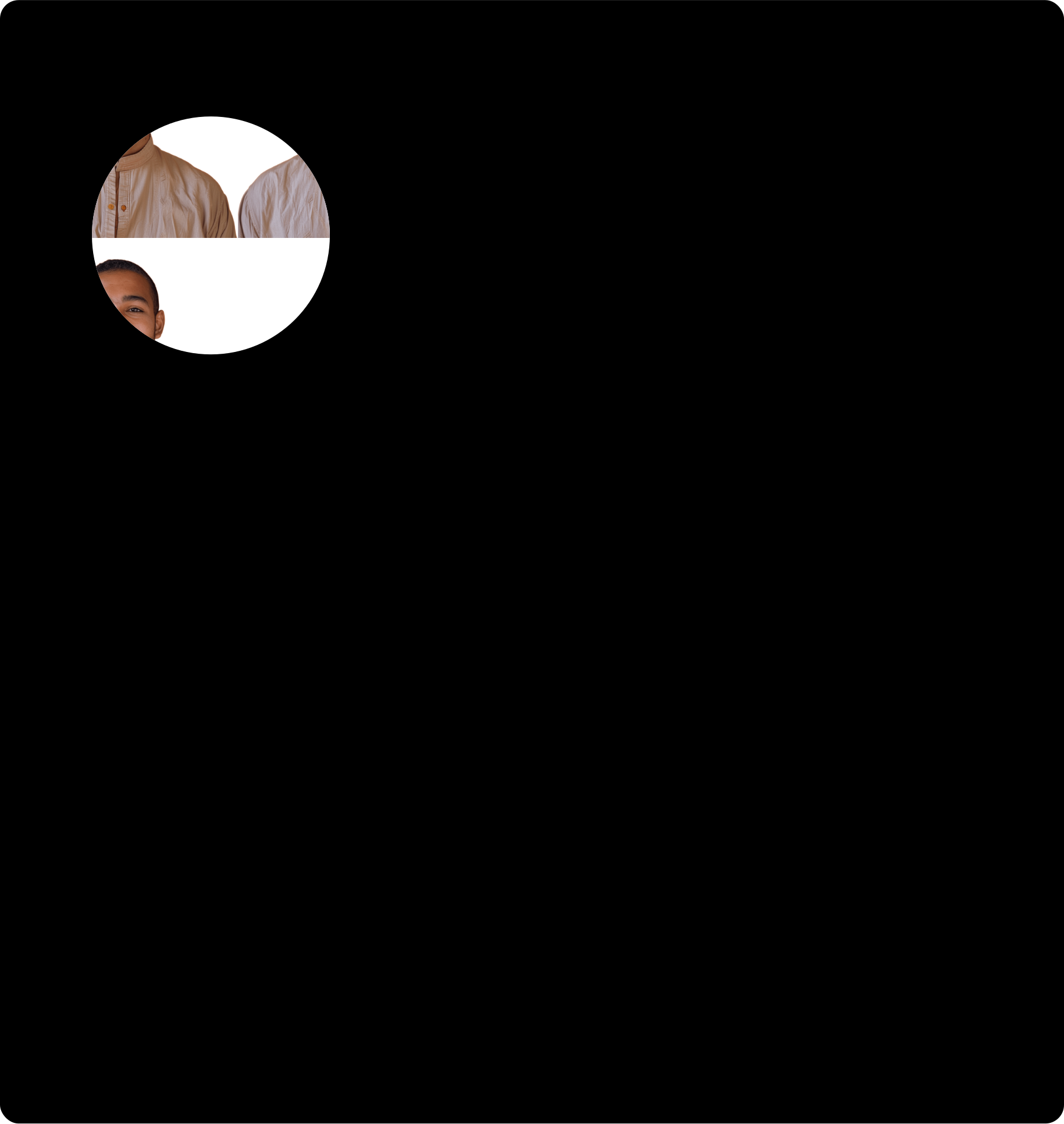
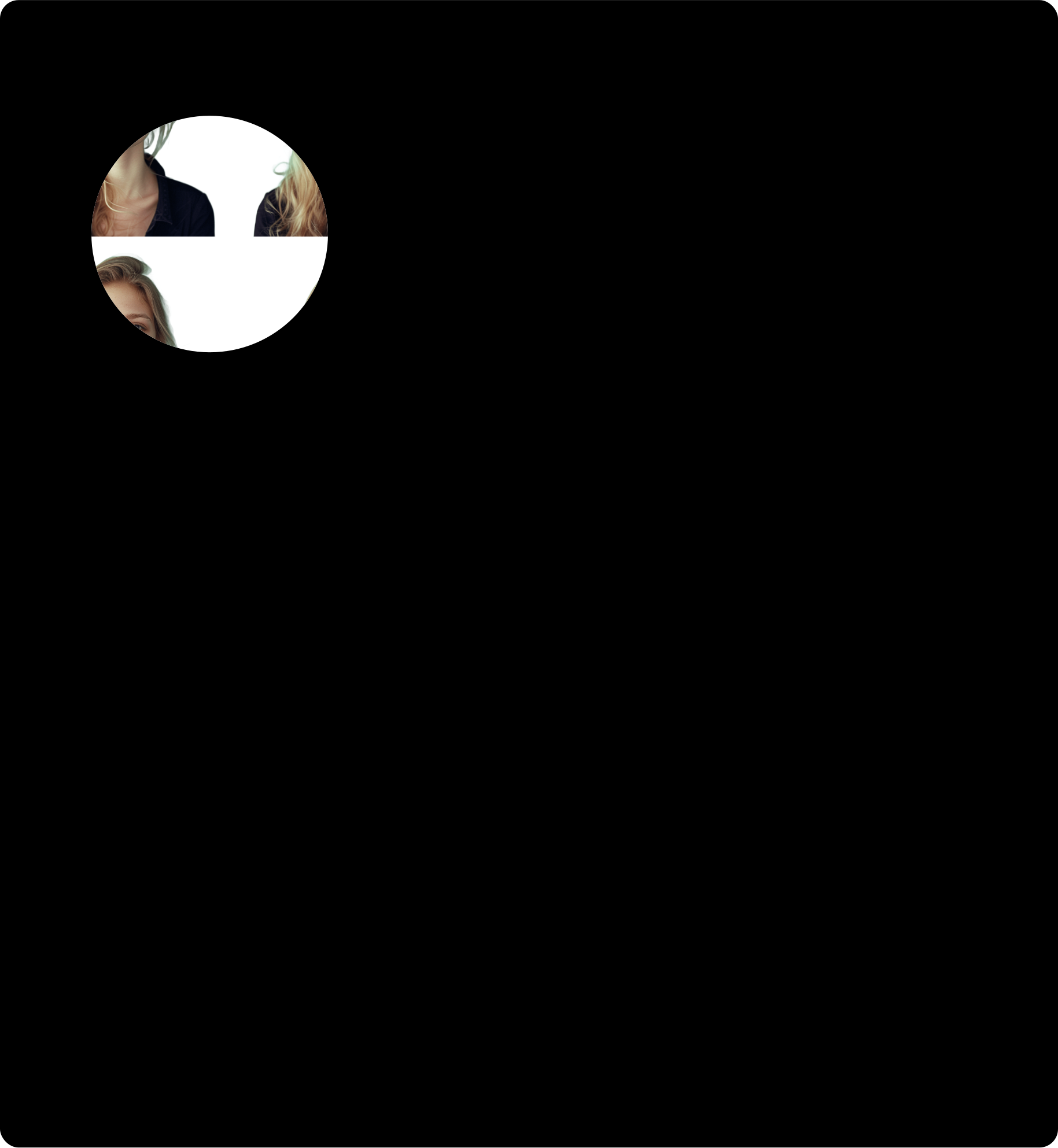

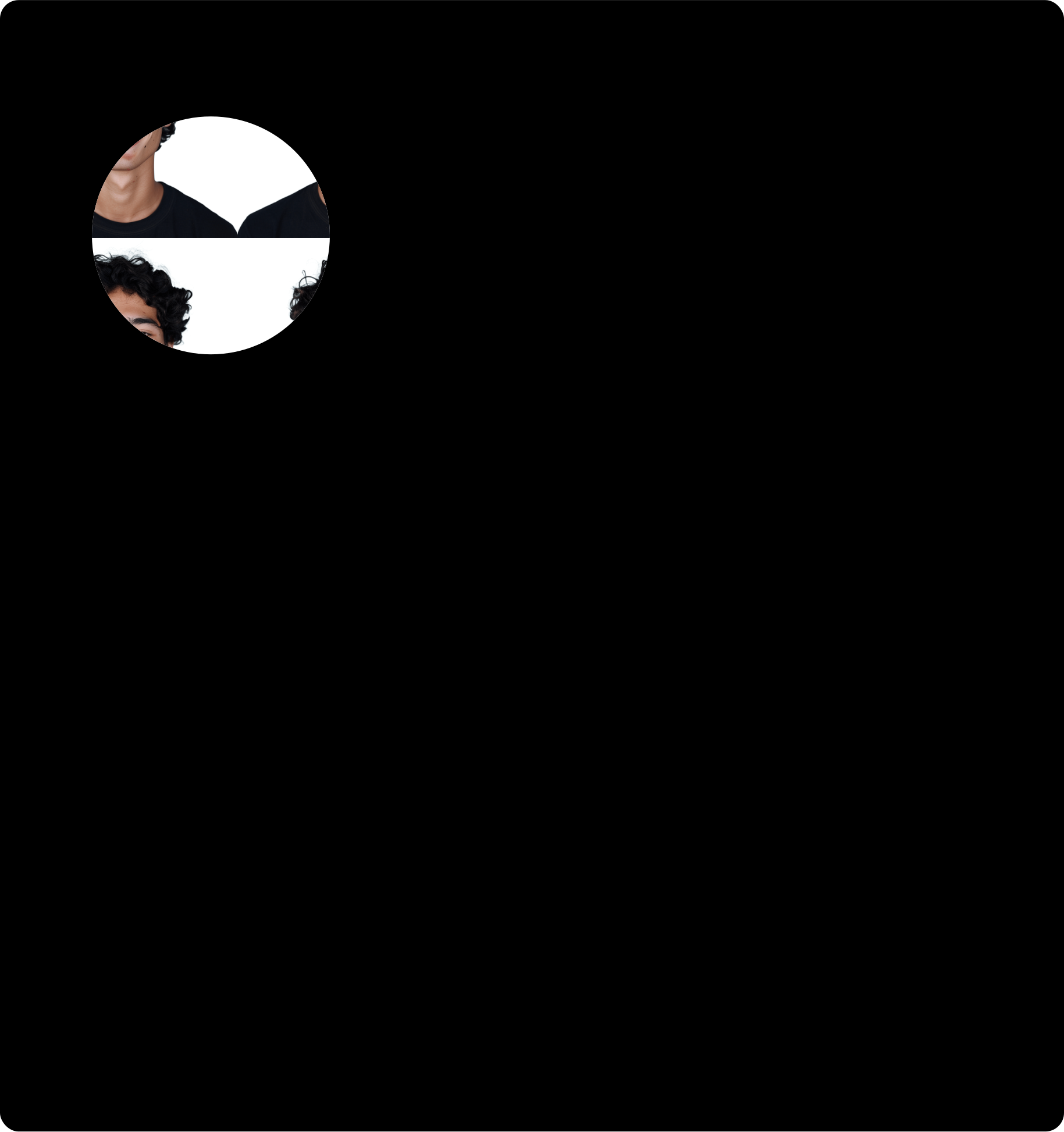
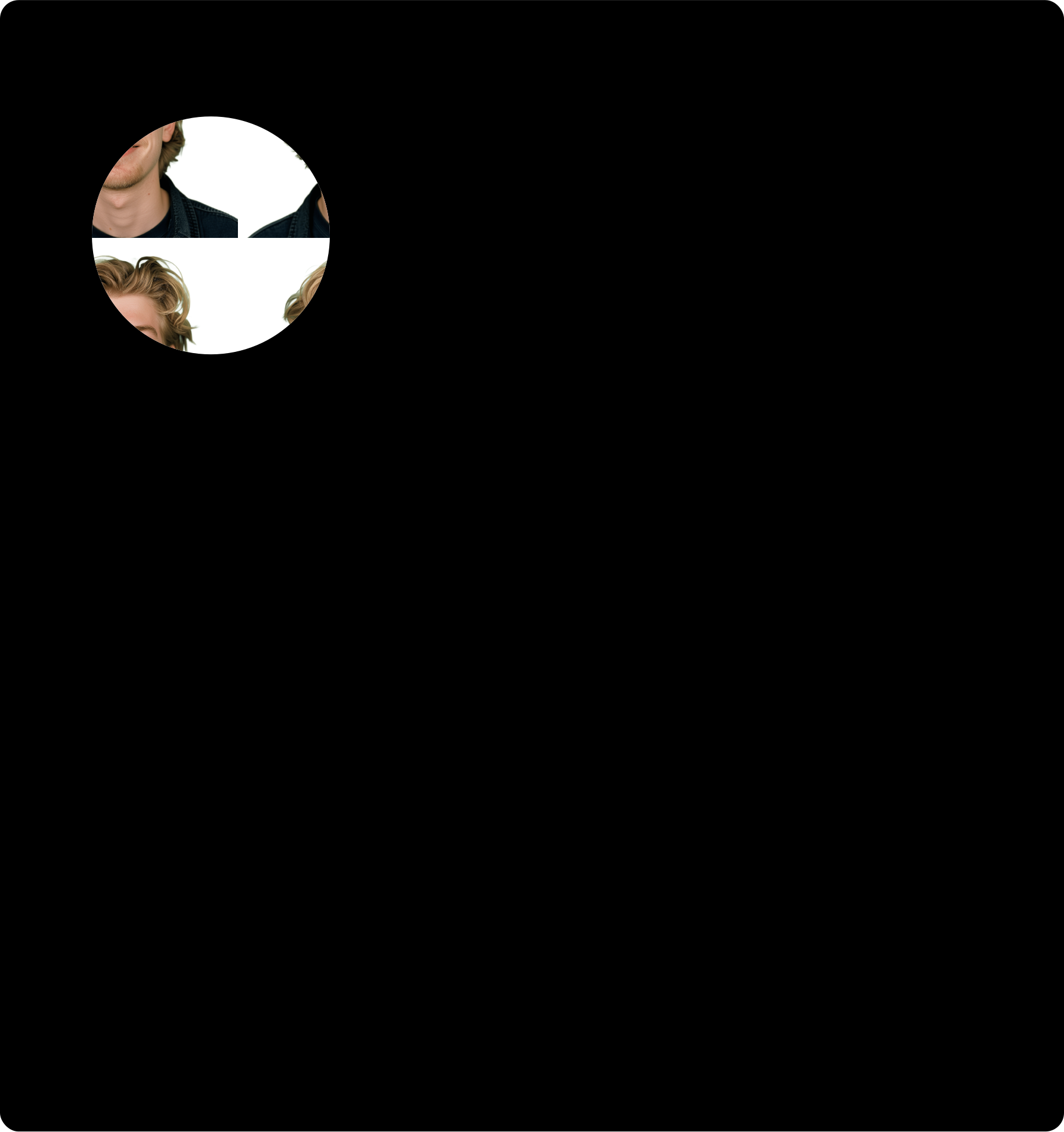
For each one, I outlined:
Key characteristics: Who they are and what defines them.
Goals: What they’re trying to achieve in their musical journey.
Pain points: The challenges they face that frustrate or hold them back.
Solutions: How the platform tackles their specific needs.
By creating these personas, I wanted to make sure the platform’s design and features stay focused on real users. My goal was to craft a user-centered experience that feels tailored to musicians, no matter where they are in their career—whether they’re just starting out or already running the show.
The Eisenhower Matrix & MoSCoW Diagram
Below is a MoSCoW diagram illustrating the key features and priorities for the Trippin’ Audio website—focusing on building trust, educating users, driving sign-ups, attracting investors, and boosting SEO.
Must Have (MoSCoW) → Urgent & Important (Eisenhower) → High-Priority Color (e.g., Red or Green)
Should Have (MoSCoW) → Important but Not Urgent (Eisenhower) → Medium-Priority Color (e.g., Yellow)
Could Have (MoSCoW) → Urgent but Not Important (Eisenhower) → Lower-Priority Color (e.g., Blue)
Won’t Have (MoSCoW) → Neither Urgent nor Important (Eisenhower) → Lowest-Priority Color (e.g., Gray)
Must Have
Necessary for the product
Clear Brand Identity & Messaging
Consistent logo, color palette, and tone to establish legitimacy and credibility.
Core Platform Overview
High-level explanation of how Trippin’ Audio helps independent artists distribute, promote, and monetize their music.
Sign-Up Call to Action (CTA)
Prominently placed buttons or links encouraging artists, producers, and fans to join.
Basic SEO Implementation
Optimized meta tags, headings, and site structure to enhance discoverability.
Should Have
Significant in the long run
About/Team Section
Showcases founding members, mission statement, and values to build trust and credibility.
Investor & Partner Info
Highlight business model, growth potential, and unique value proposition to attract funding and partnerships.
Resource Hub or FAQ
Educates artists and fans on distribution processes, monetization options, and platform benefits.
Success Stories & Testimonials
Reinforces legitimacy with real-world examples of artists who have benefited from Trippin’ Audio.
Could Have
Slightly increase product's worth
Blog or News Section
Regular updates on platform developments, music industry insights, and success stories to drive ongoing SEO and user engagement.
Multimedia Content (Videos, Webinars)
Deeper educational resources that explain the platform’s features and show how to use them effectively.
Live Chat or Chatbot
Provides immediate support to users, improving user experience and boosting conversions.
Won't Have
Can be ignored for now
Full Music Distribution Functionality On-Site
The website will primarily serve as an informational gateway and sign-up portal, directing users to the platform for advanced features.
Advanced Community Interaction
In-depth social features and collaboration tools will reside within the main Trippin’ Audio Platform, rather than the marketing website.
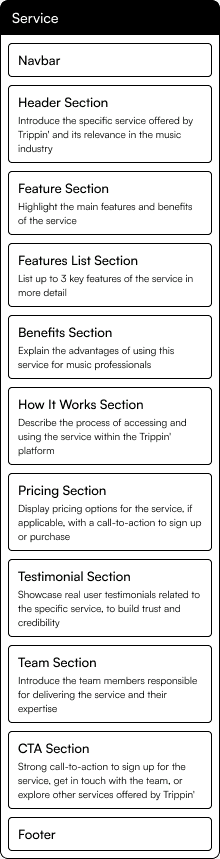
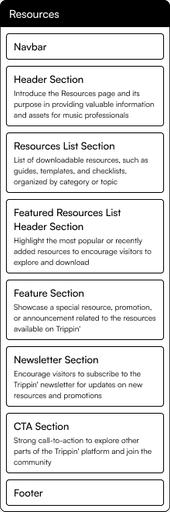
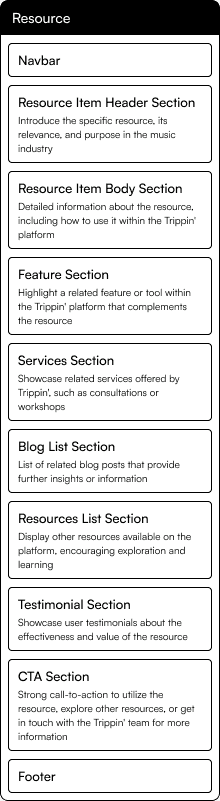
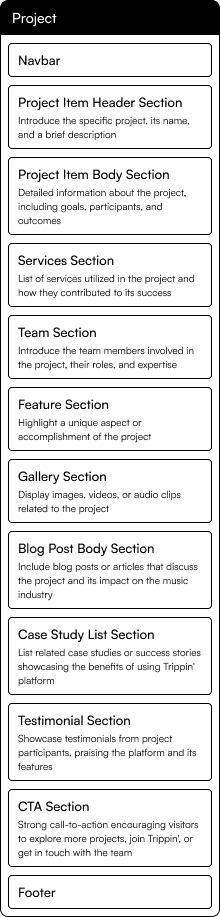
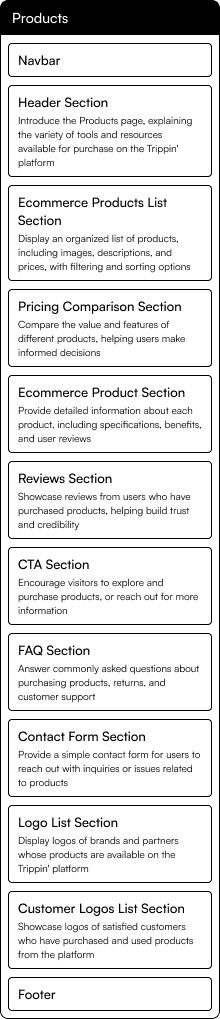
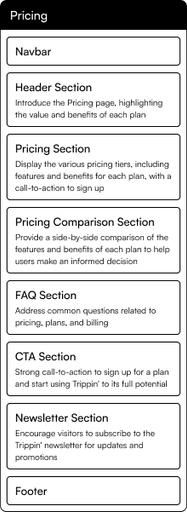
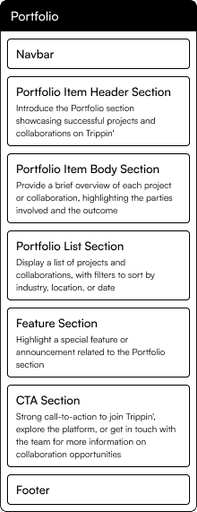
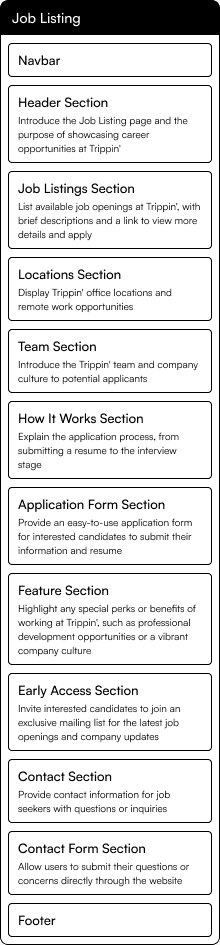
Sitemap

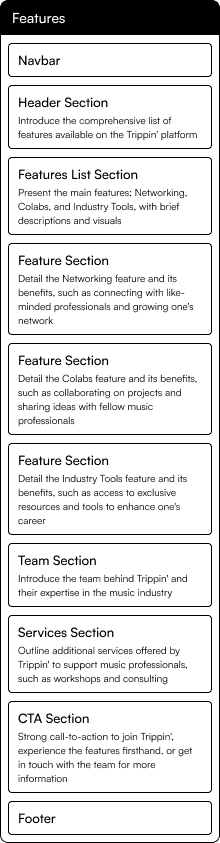
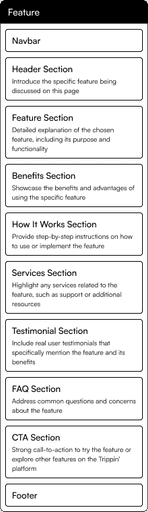
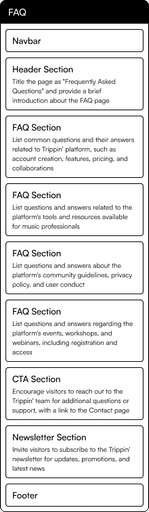
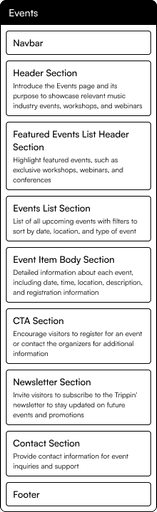
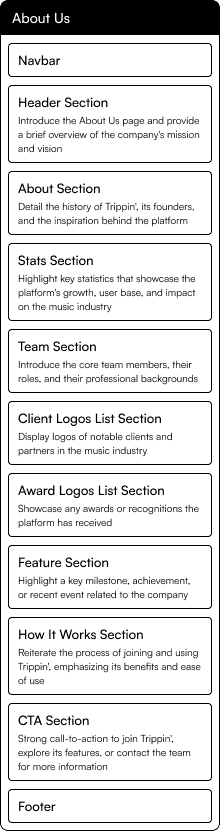
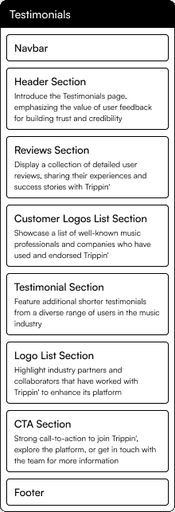
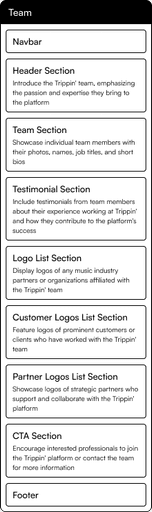
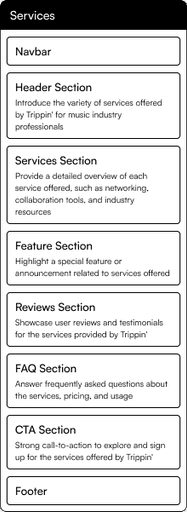
Crafting the Identity
Defining Our Color Palette & Visual Language
Neutral
0
Primary Background
#E1E6EF
100
Base Background
#CFCFCF
200
Secondary Background
#AFAFAF
300
Line
#8F8F8F
700
Line
#707070
800
Secondary Background
#505050
900
Base Background
#303030
1000
Primary Background
#101010
Primary
100
Background
#F0F5FF
Gradient
Gradient
Background
#1A1A1A
Secondary
100
Background
#F8F5FF
Highlight
Border
#00FFD1
Border
Button / Label
#0094FF
Success
100
Background
#C1FFBF
700
Default
#44FF40
800
Hover
#04BF00
900
Pressed
#014000
Warning
100
Background
#FFD9BF
700
Default
#FF8D40
800
Hover
#BF4D00
900
Pressed
#552200
Danger
100
Background
#FEF1F2
700
Default
#E02D3C
800
Hover
#BA2532
900
Pressed
#981B25
Text + Icons
Primary
#101010
100%
Secondary
#101010
80%
Disabled
#101010
40%
Primary
#EFEFEF
100%
Secondary
#EFEFEF
60%
Disabled
#EFEFEF
40%
Typography
Establishing a Distinct Typographic Identity
Typeface
Font size: 66px | Line height: 100%
Display Large
Font size: 46px | Line height: 100%
Display Medium
Font size: 38px | Line height: 100%
Display Small
Font size: 34px | Line height: 100%
Headline Large
Font size: 30px | Line height: 100%
Headline Medium
Font size: 26px | Line height: 100%
Headline Small
Font size: 22px | Line height: 100%
Title Large
Font size: 20px | Line height: 100%
Title Medium
Font size: 18px | Line height: 100%
Title Small
Font size: 18px | Line height: 100%
Label Large
Font size: 16px | Line height: 100%
Label Medium
Font size: 14px | Line height: 100%
Label Small
Font size: 18px | Line height: 100%
Body Large
Font size: 16px | Line height: 100%
Body Medium
Font size: 14px | Line height: 100%
Body Small
Hi-Fi Wireframing
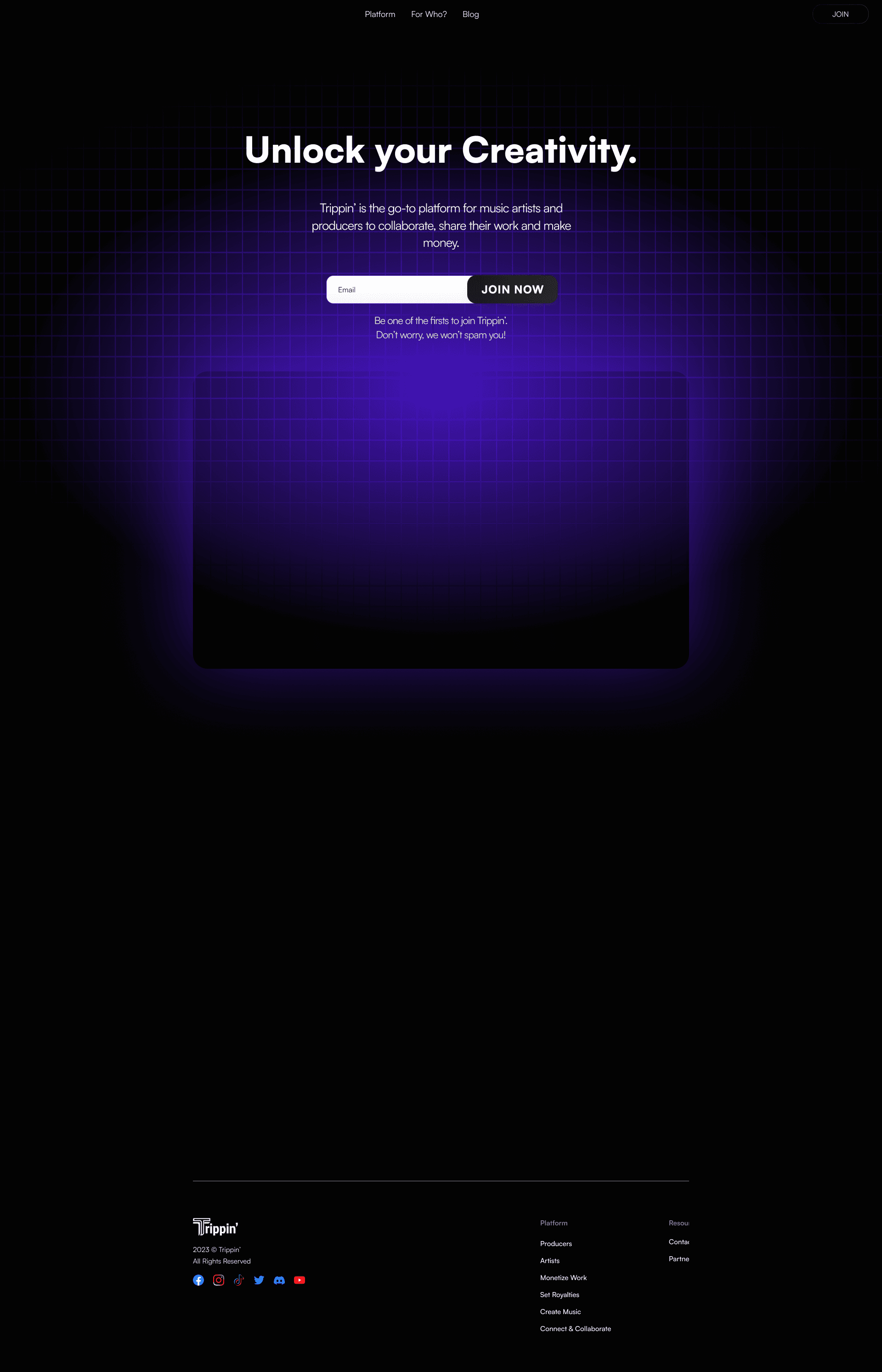
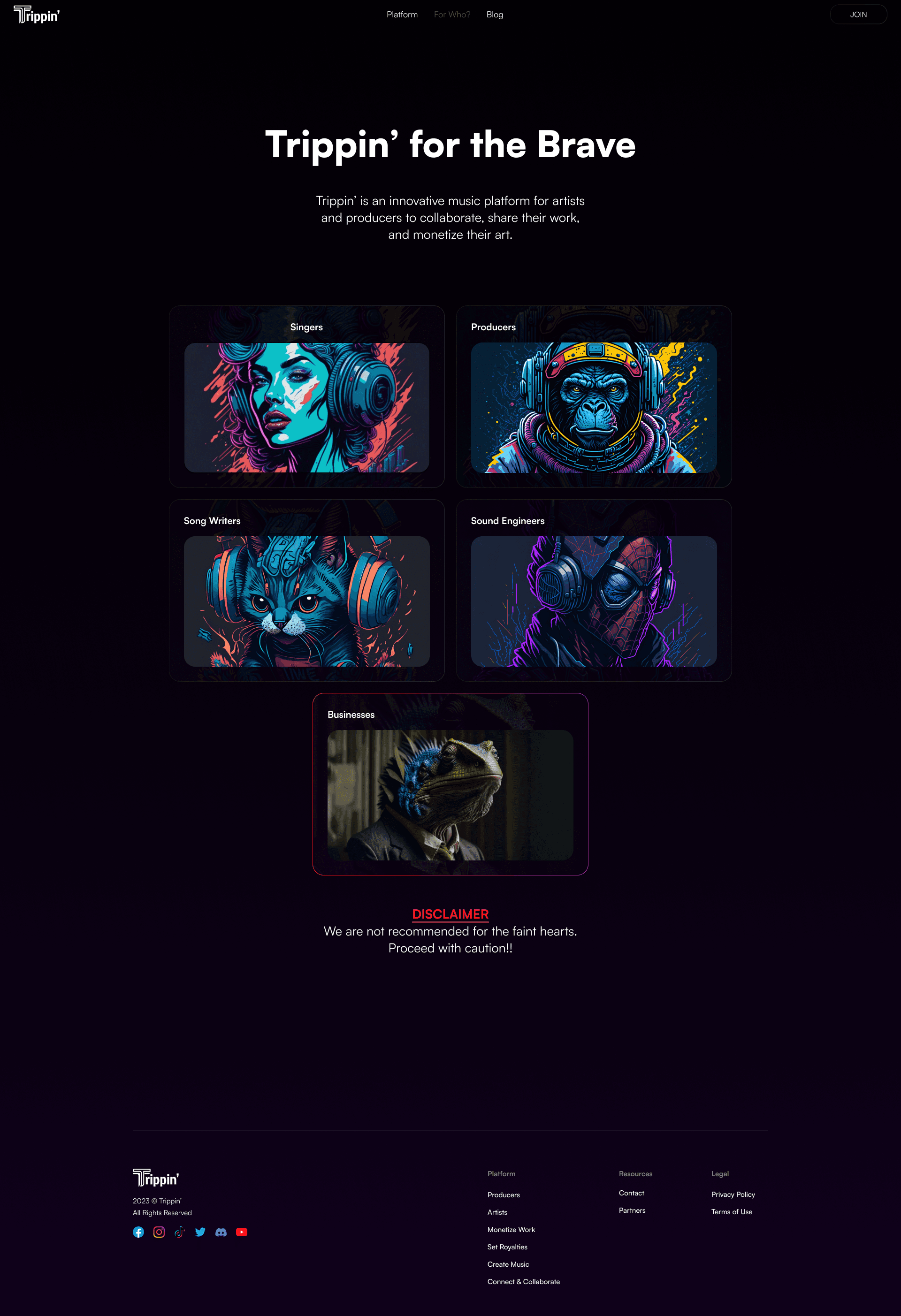
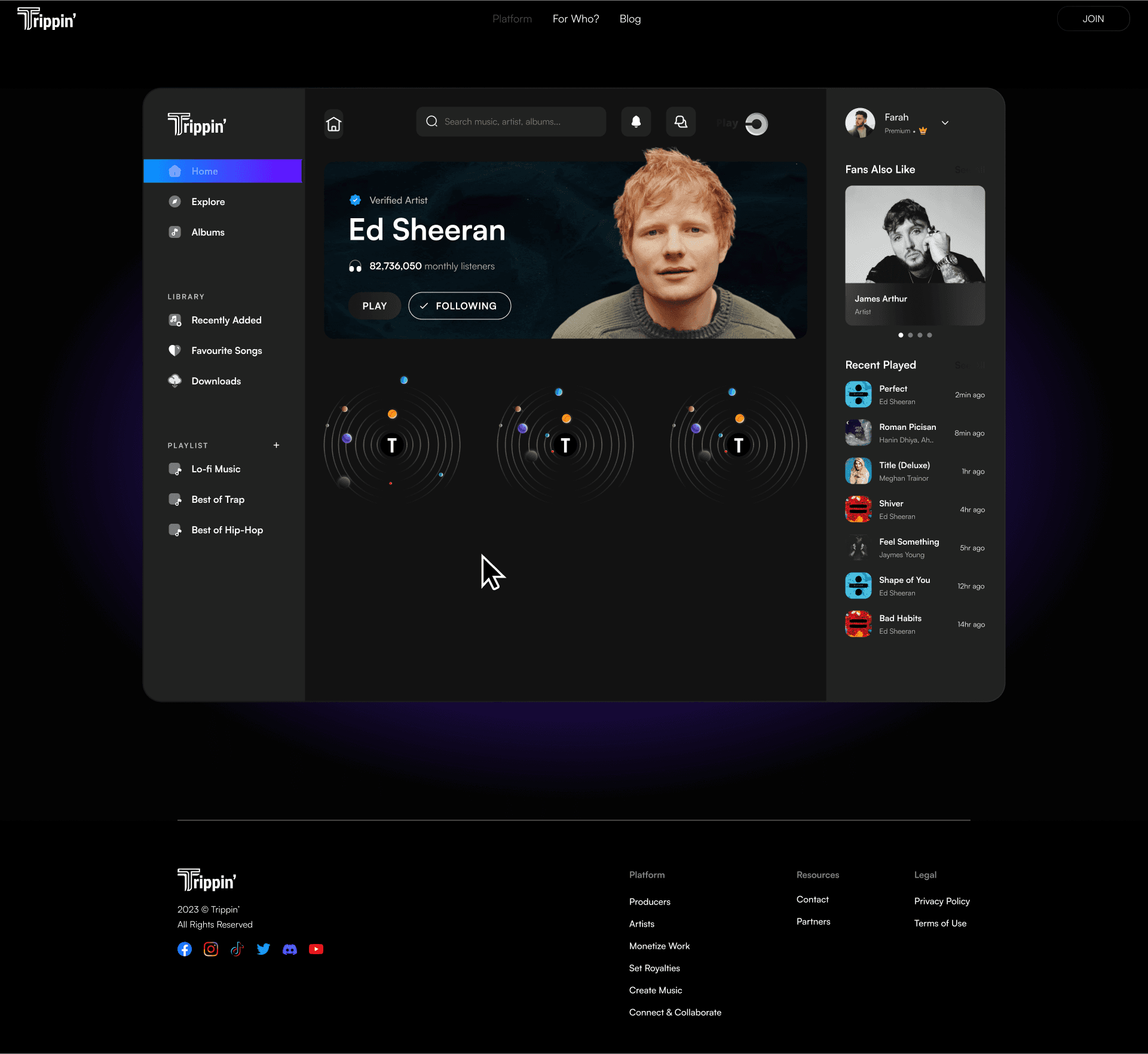
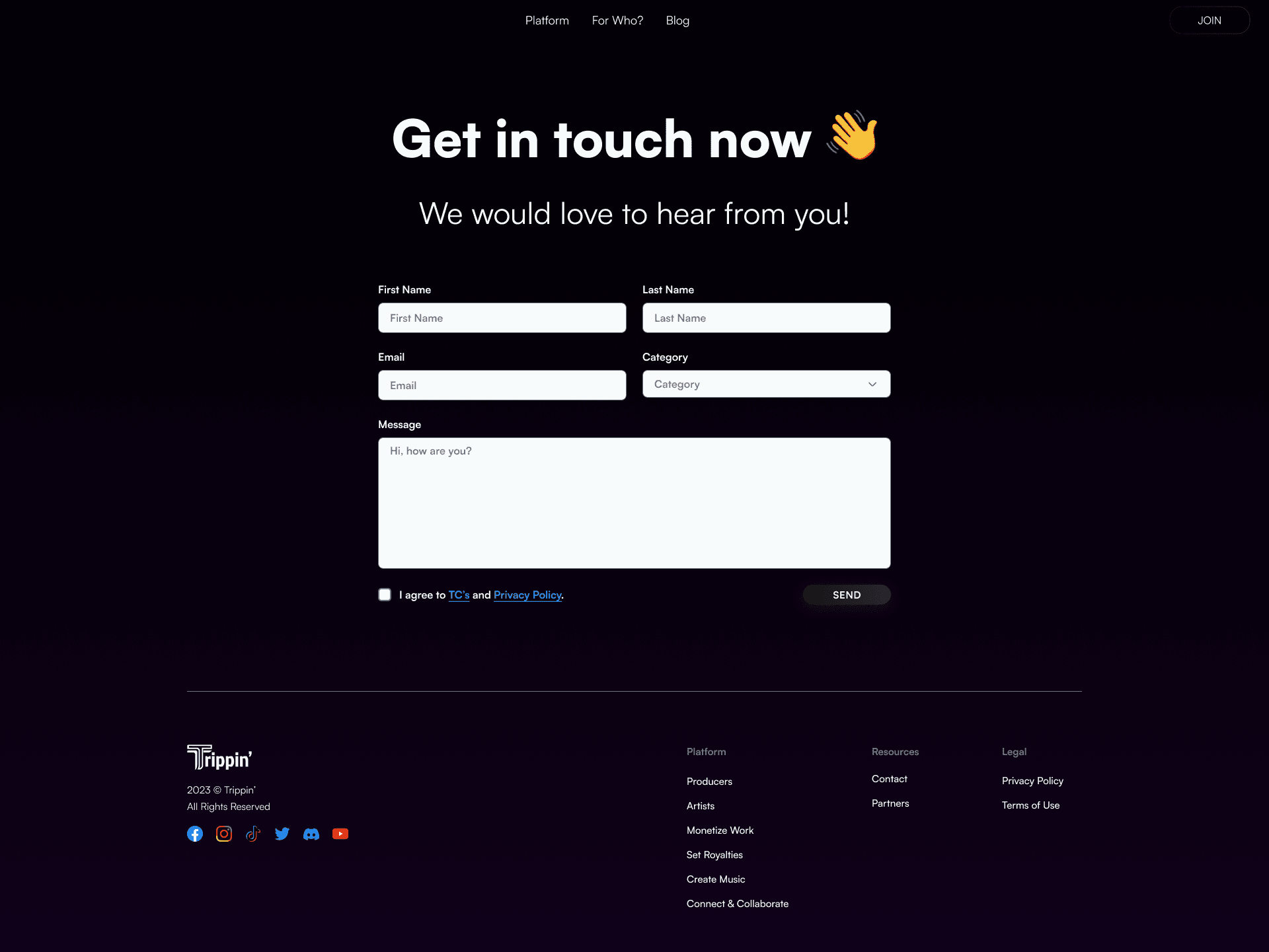
I iterated through three distinct versions of the website’s hi-fi wireframes, refining the visual layout, user interactions, and overall experience at each step. In the end, I settled on the version that best mirrors the look and feel of the Trippin' Audio platform, ensuring that the final design is consistent, engaging, and true to our vision.
Iteration #1
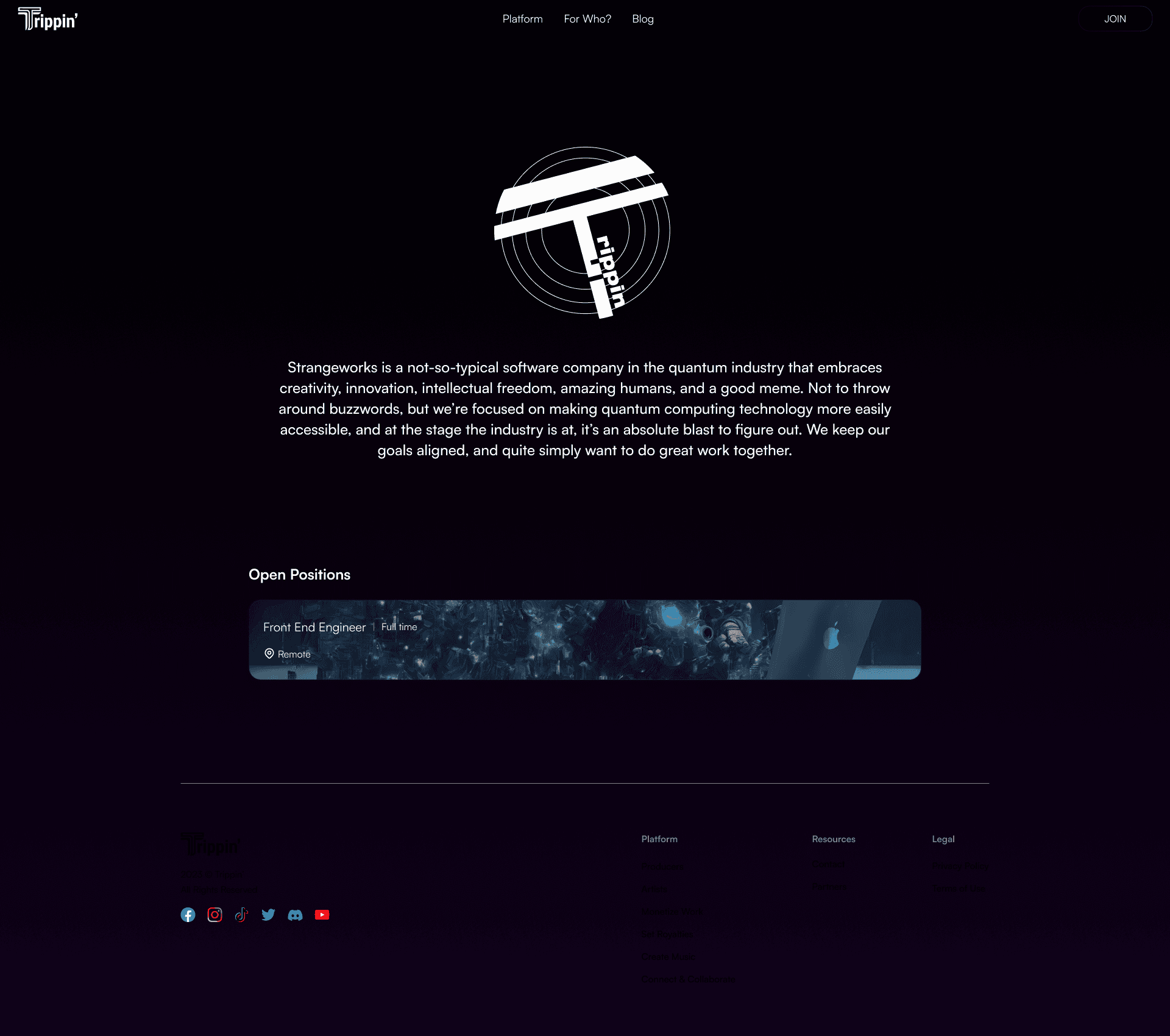
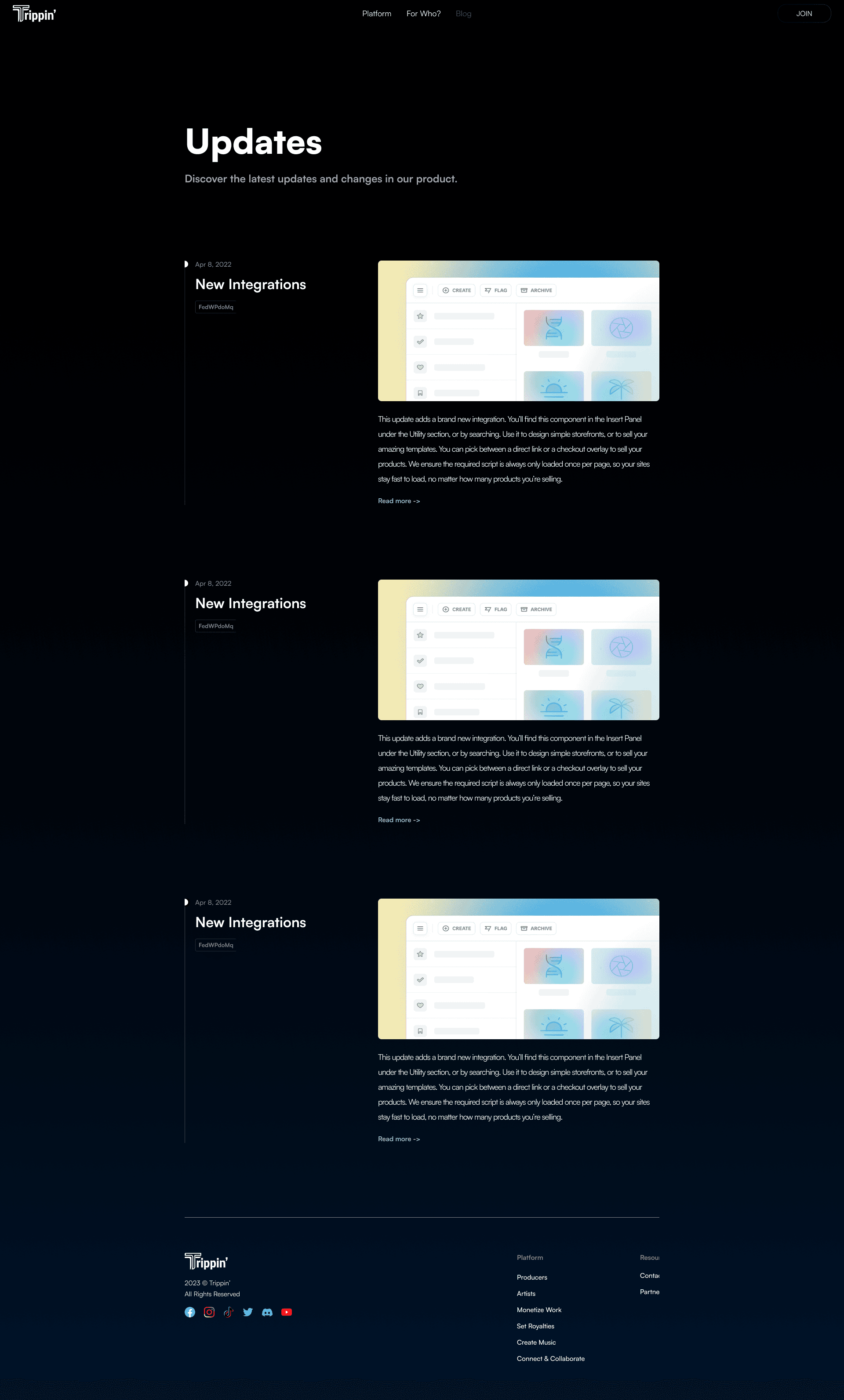
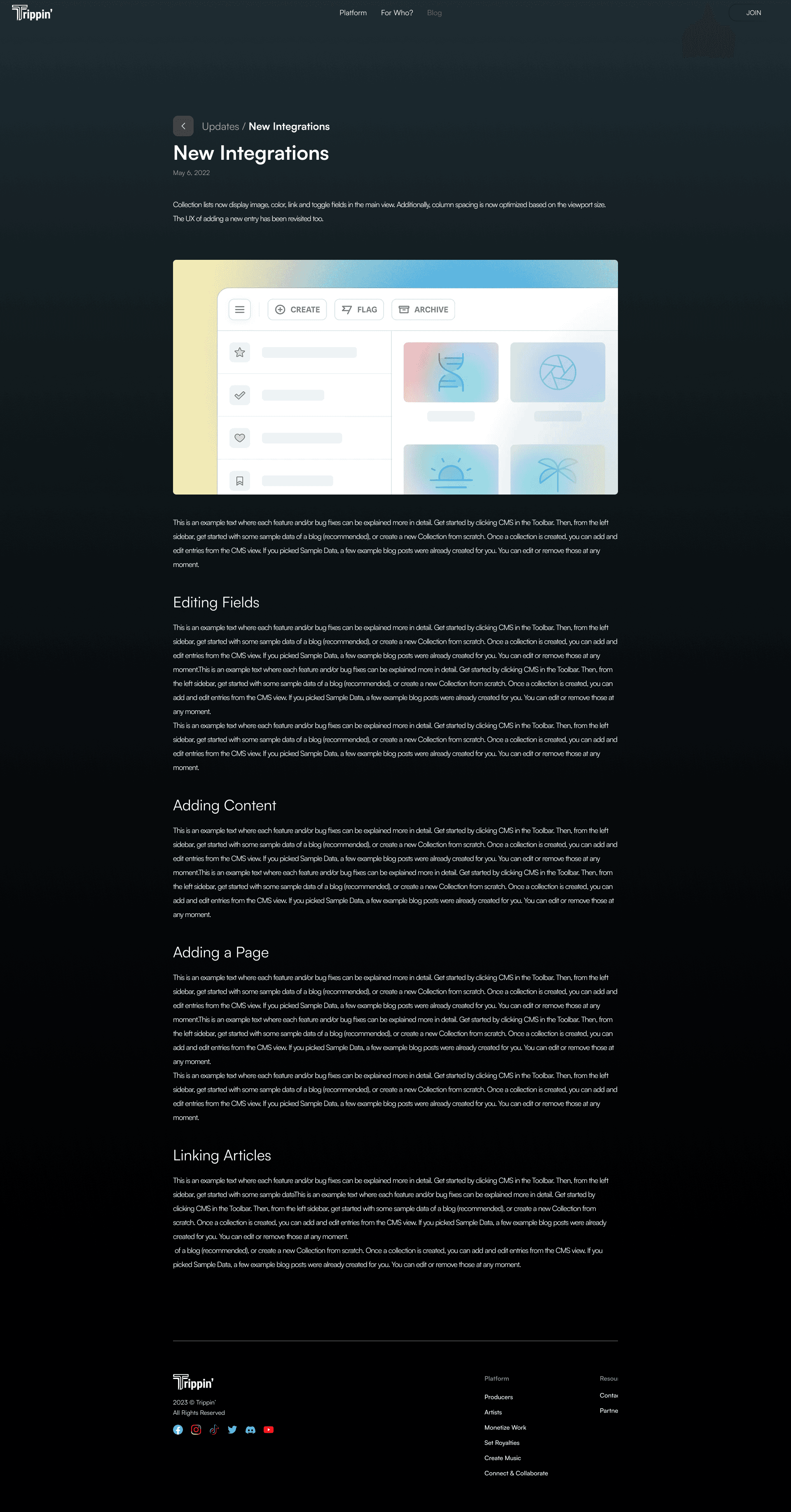
Why not this version?
The first iteration of the website was a valuable learning experience, but it didn’t fully capture the essence of our brand. Feedback revealed that the animal avatars missed the mark in conveying our intended message, and overall, the design felt uninspired and disconnected from the vibrant personality we aim to project. This early version helped us identify key areas for improvement, setting the stage for a more dynamic and brand-aligned direction in our subsequent iterations.
Iteration #2
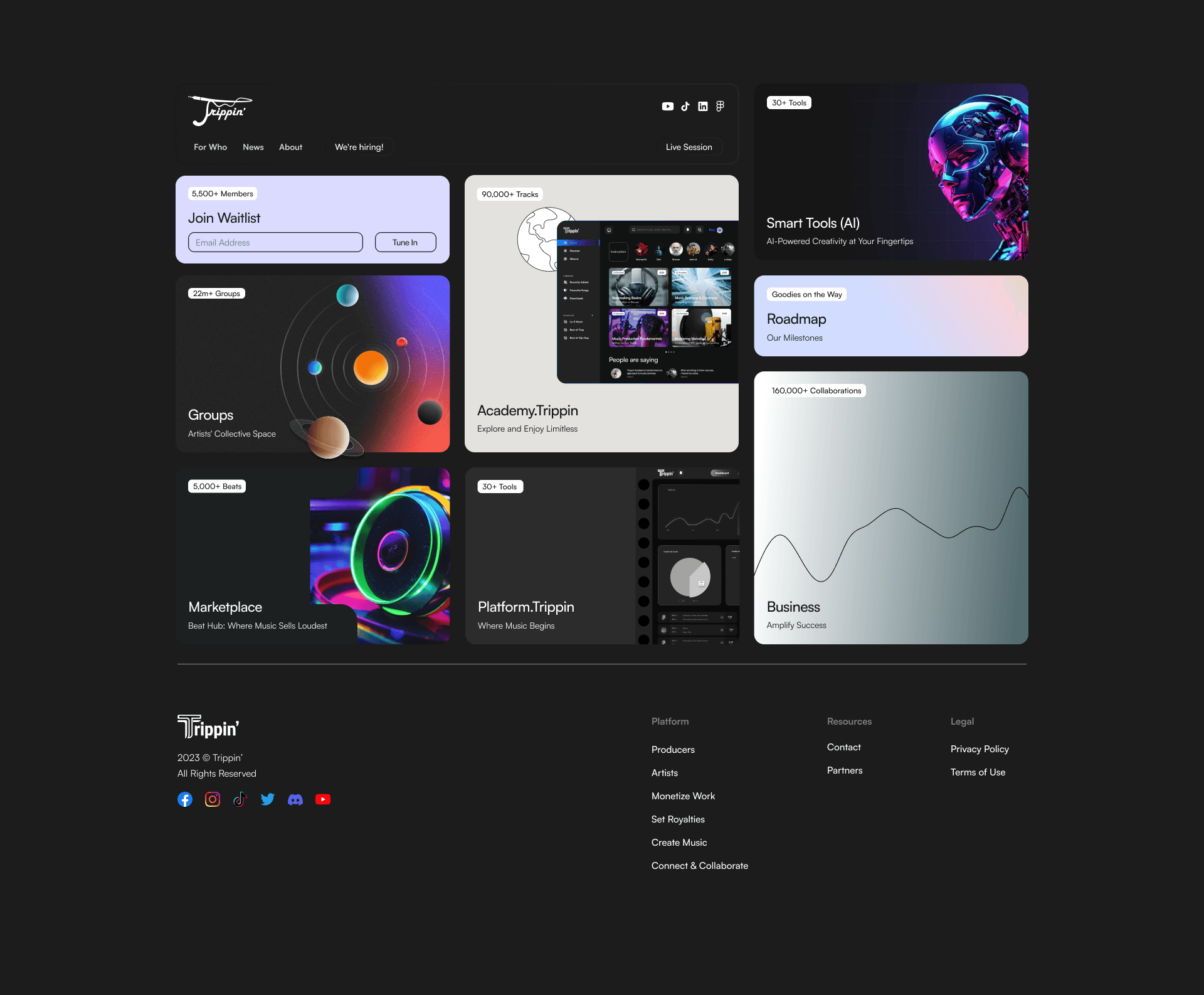
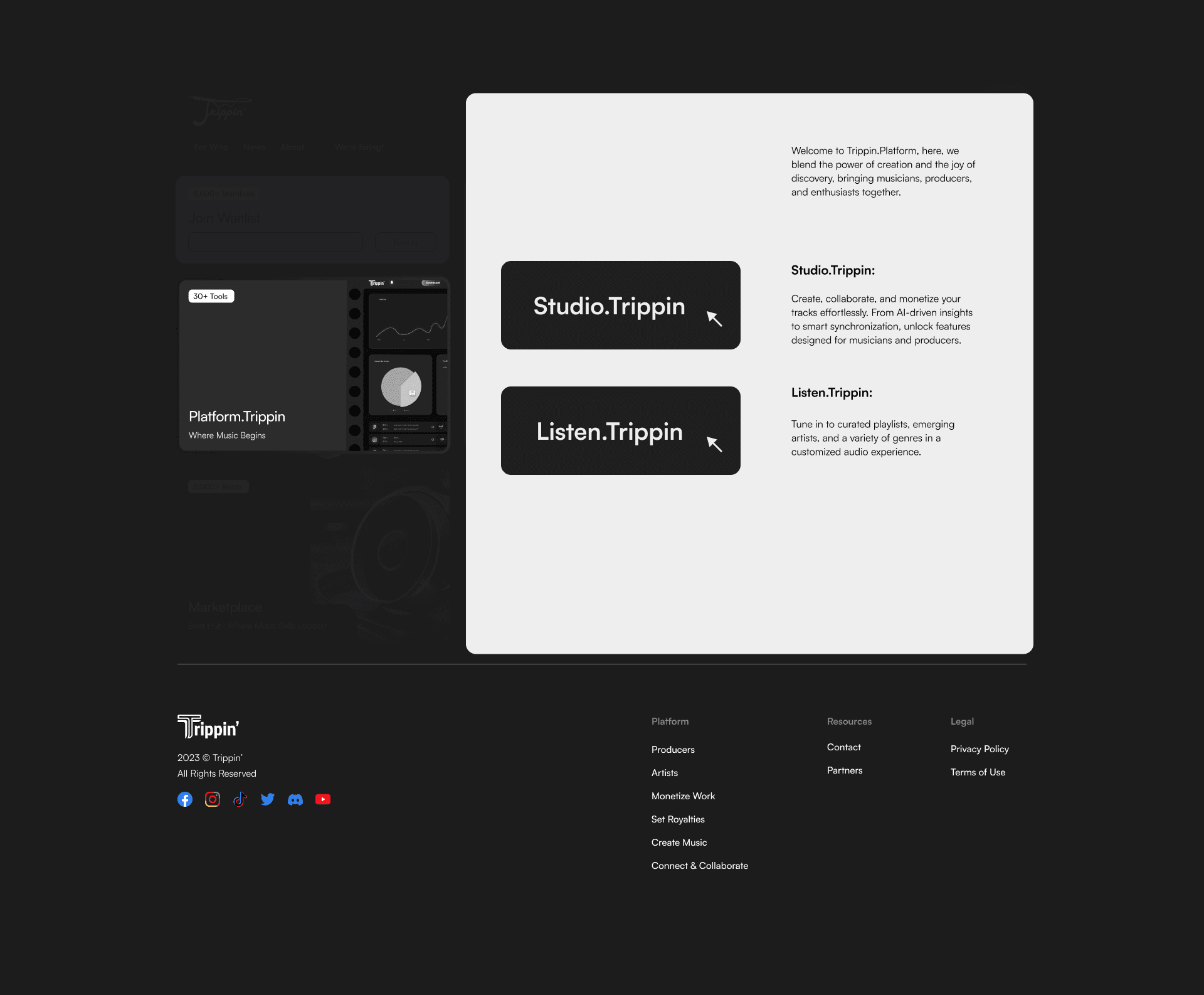
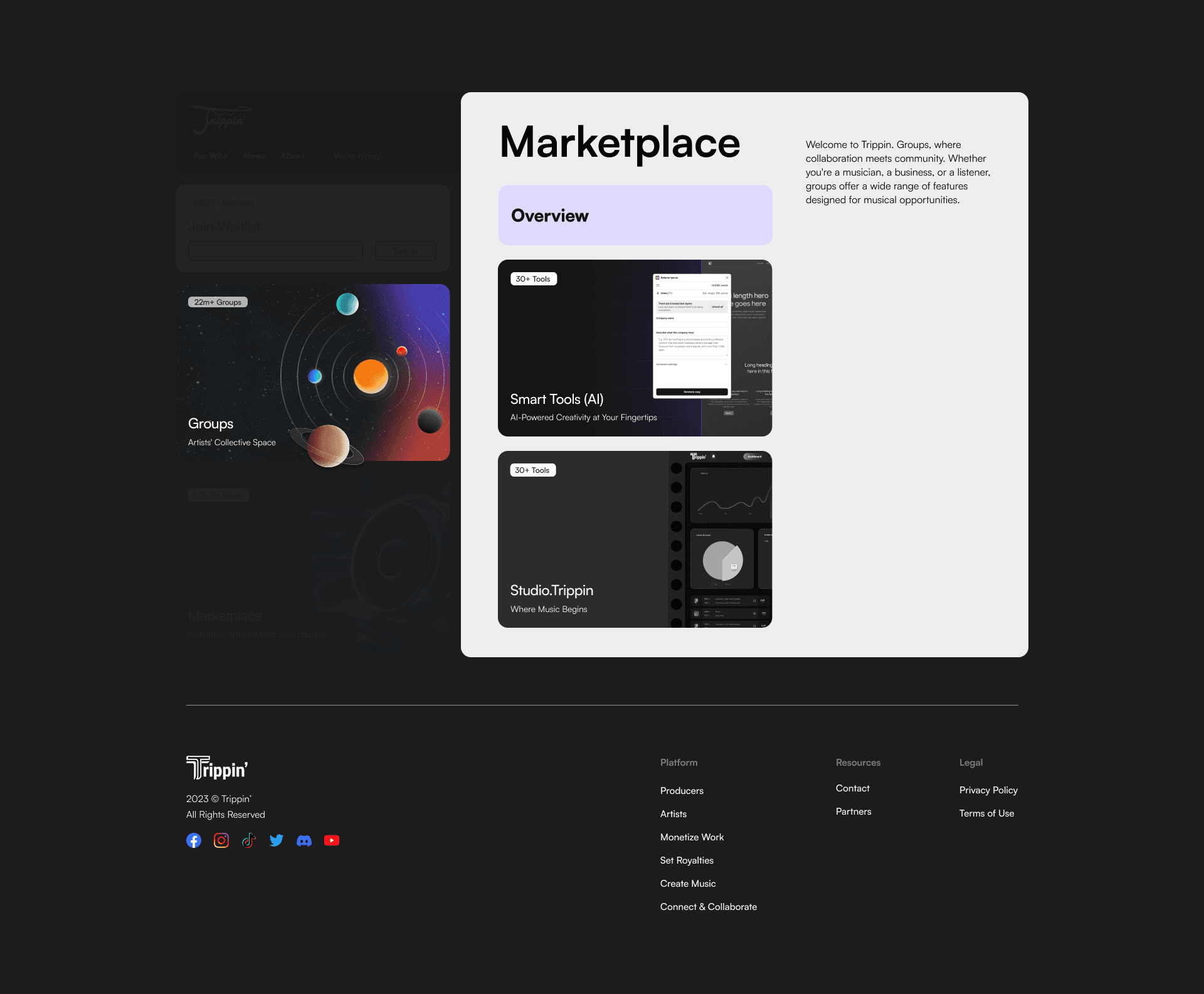
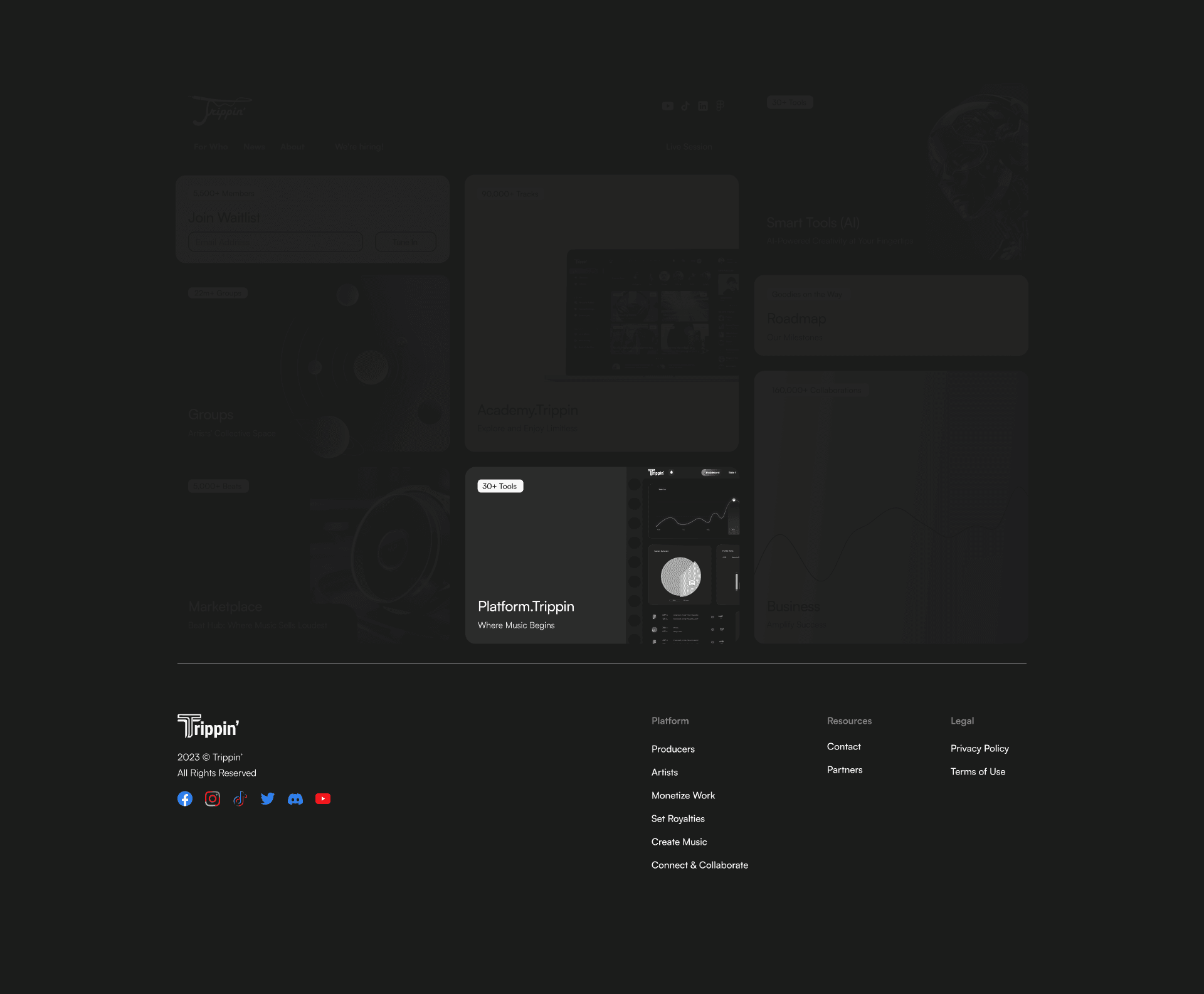
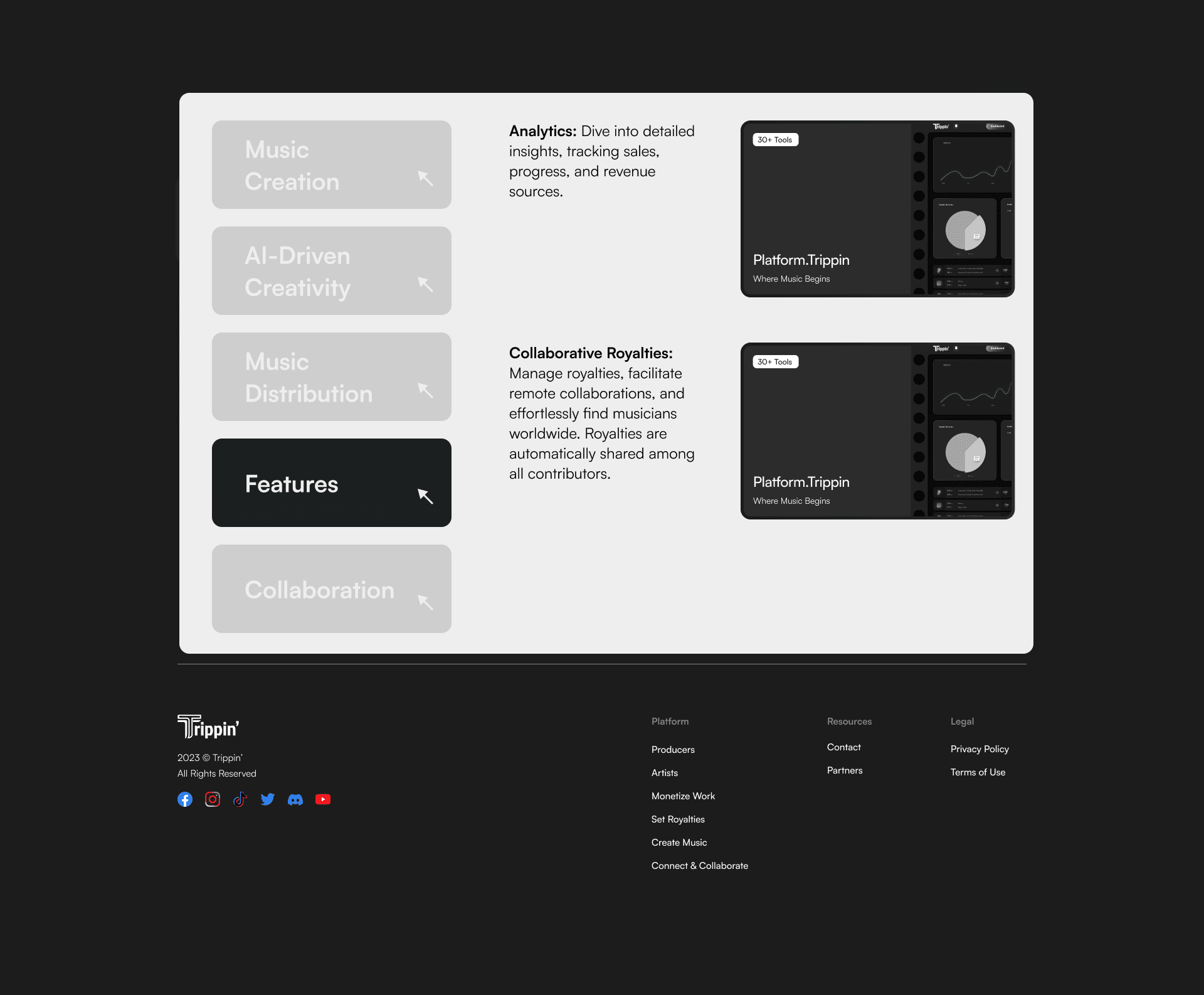
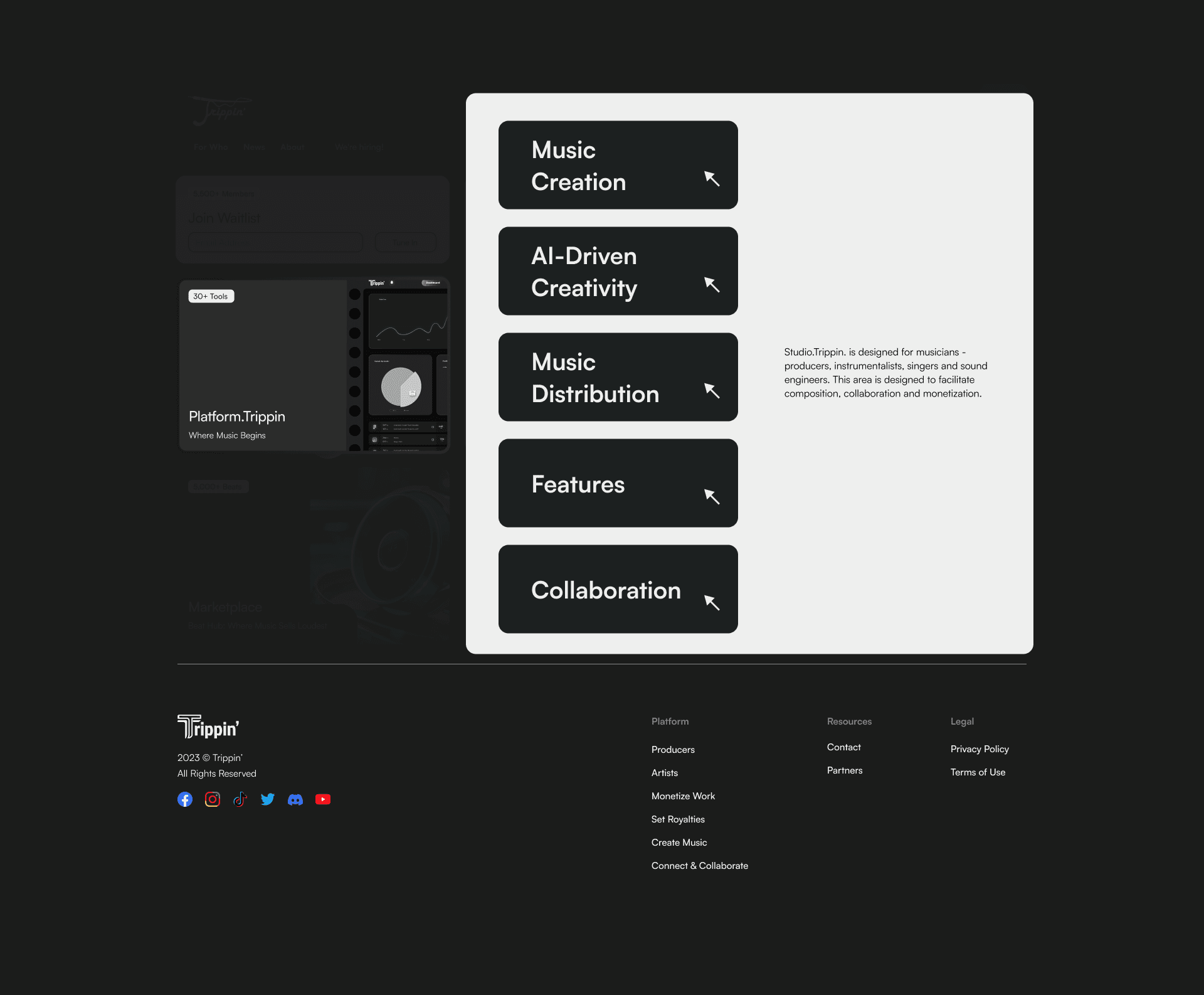
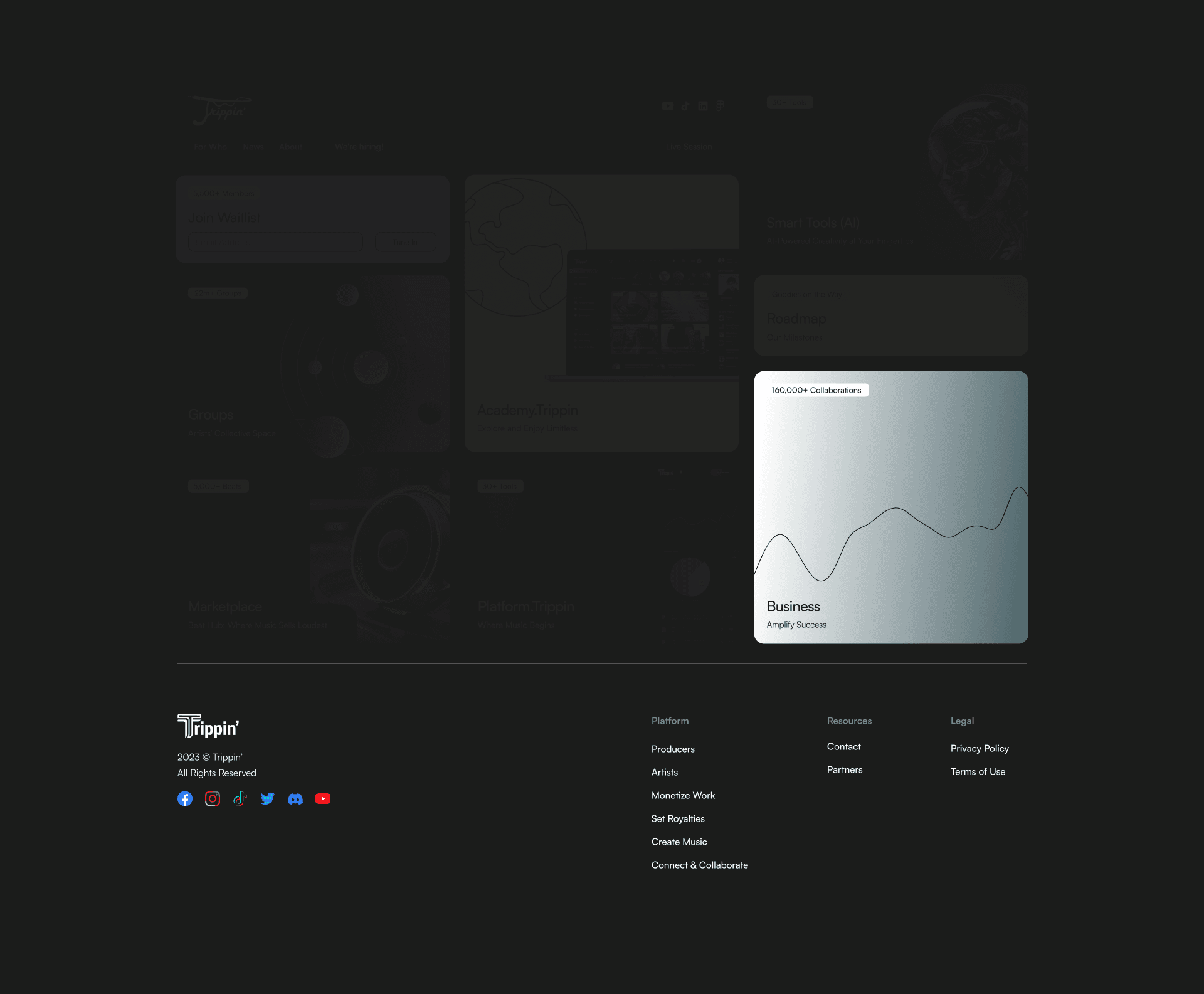
Why not this version?
After launching the second iteration, we discovered that users struggled to navigate the website, resulting in key information being overlooked. The abundance of animations, while intended to add visual interest, ultimately made the experience feel clunky and diverted attention from the most important sections. This feedback was instrumental in refining our design to create a clearer, more intuitive user journey.
Final Iteration
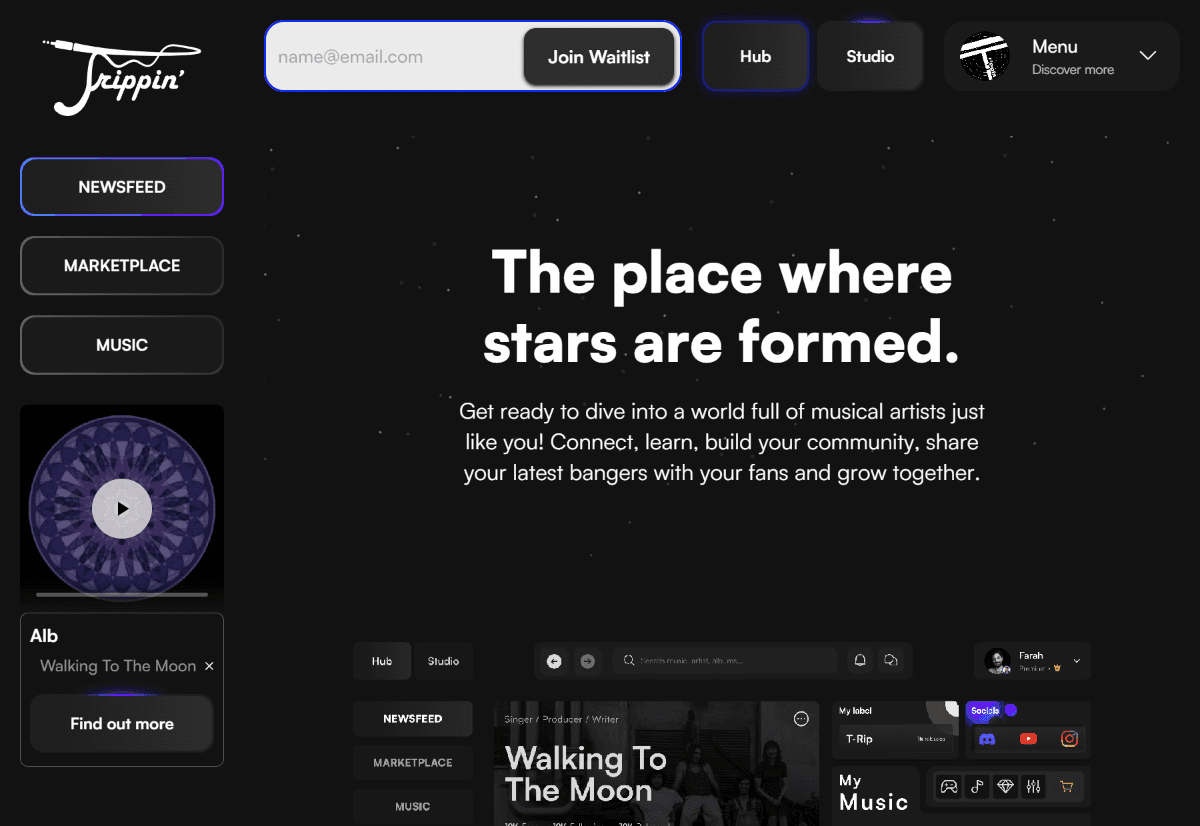
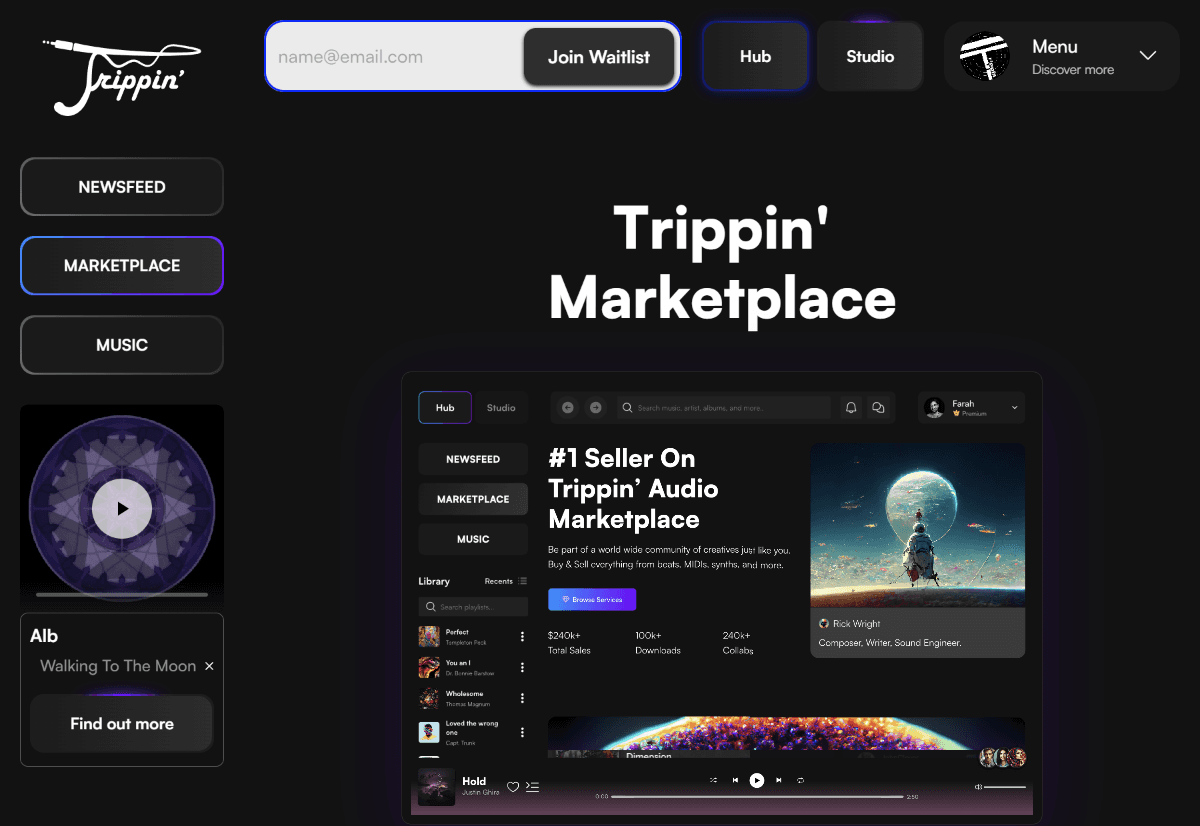
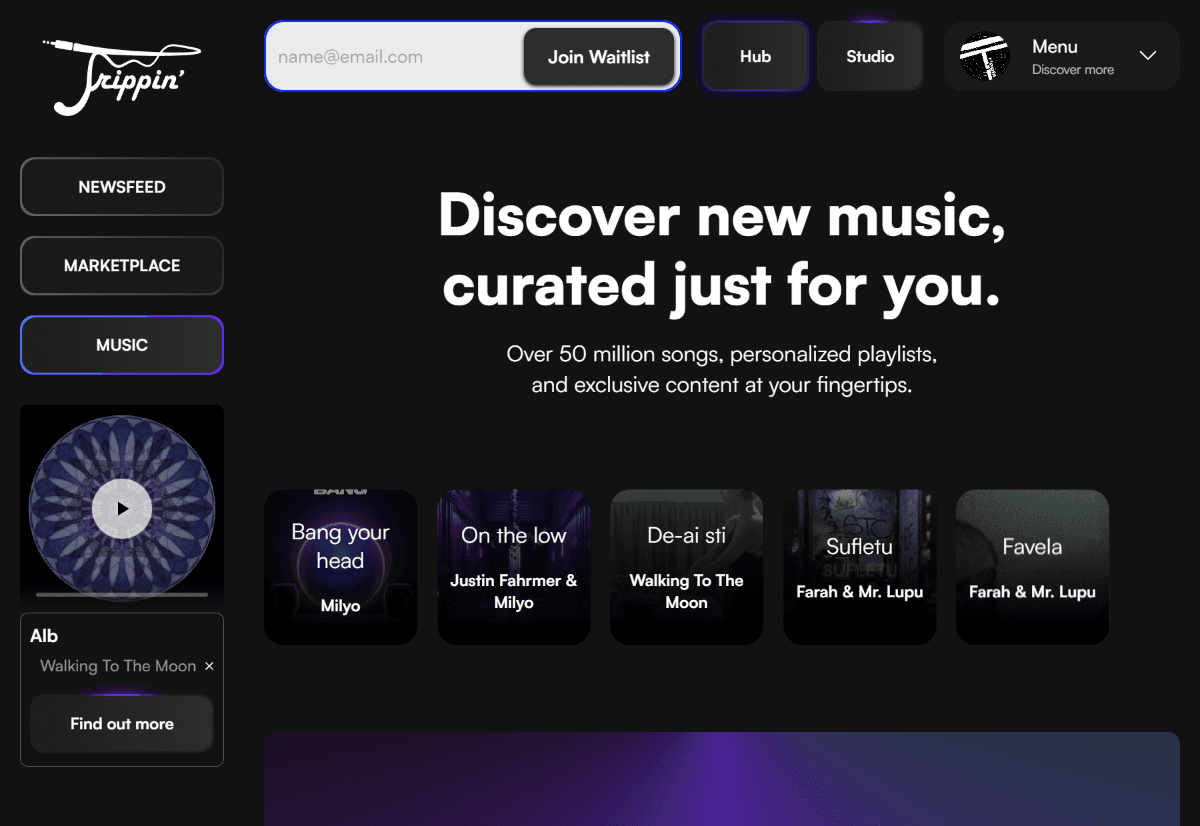
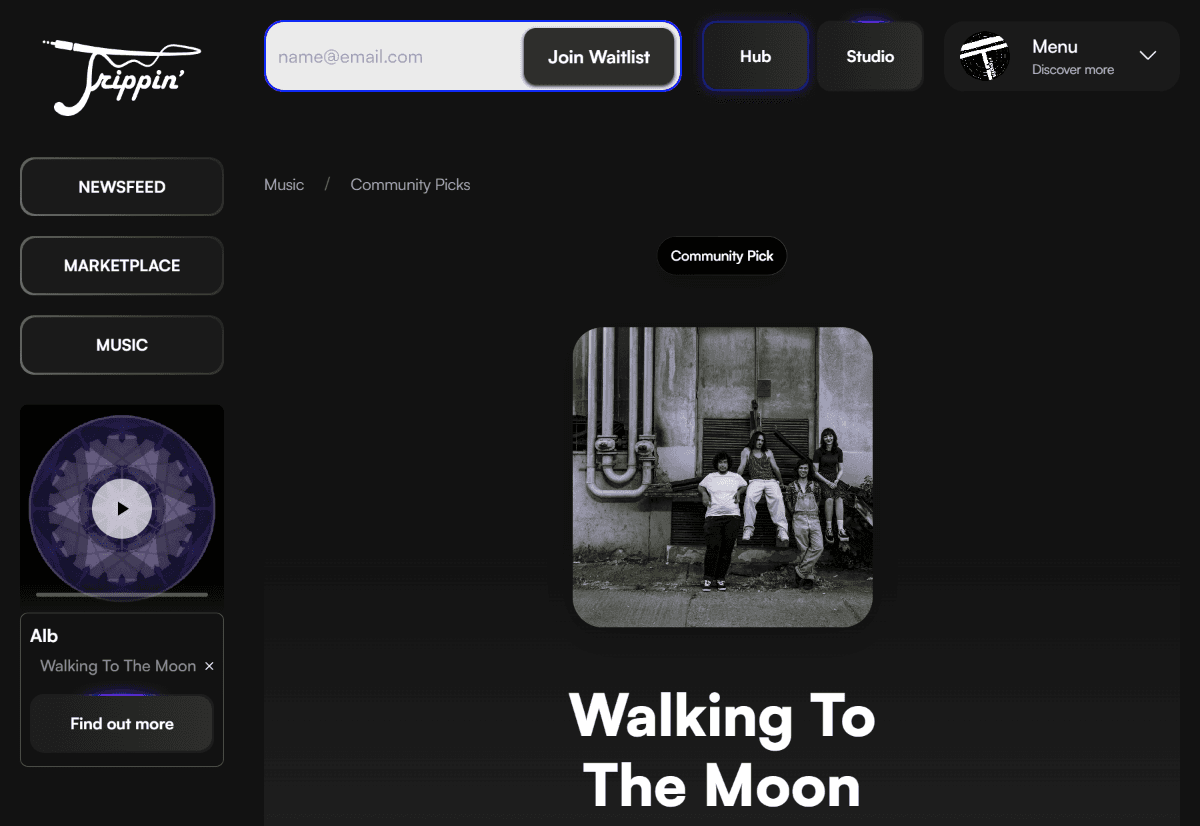
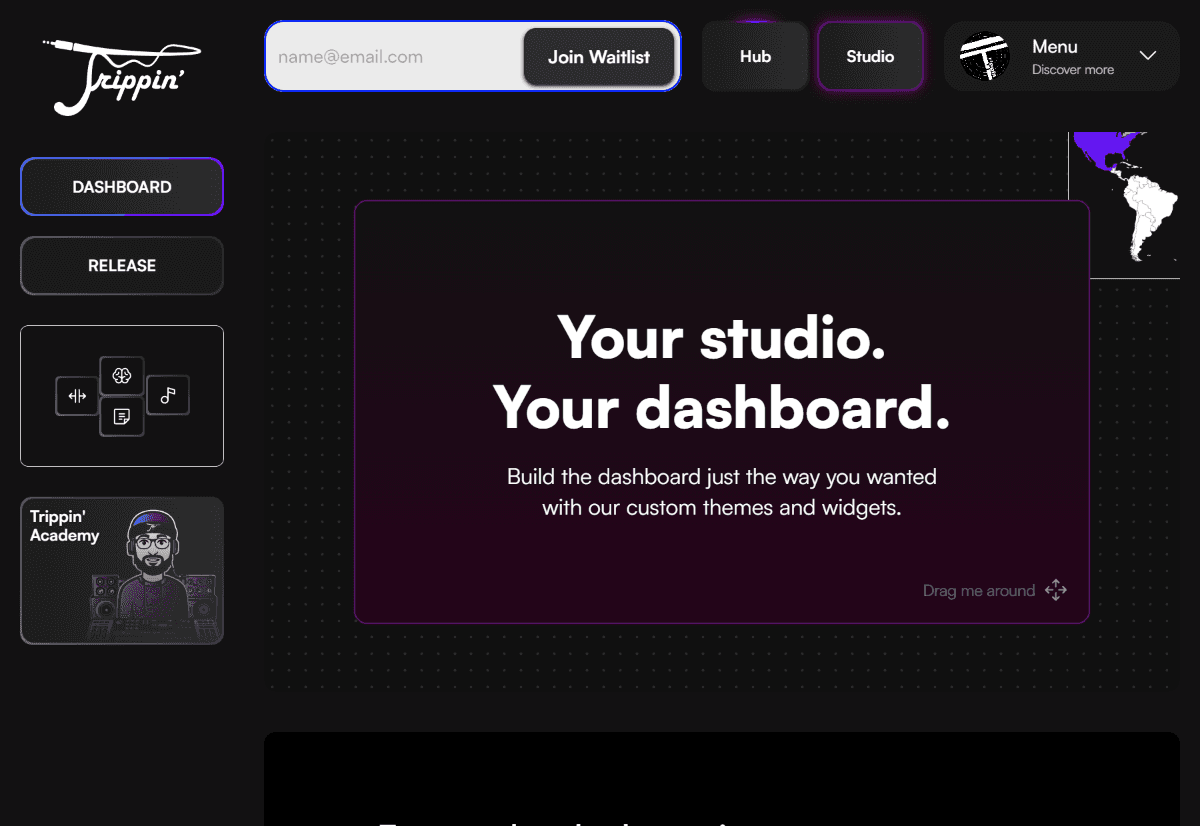
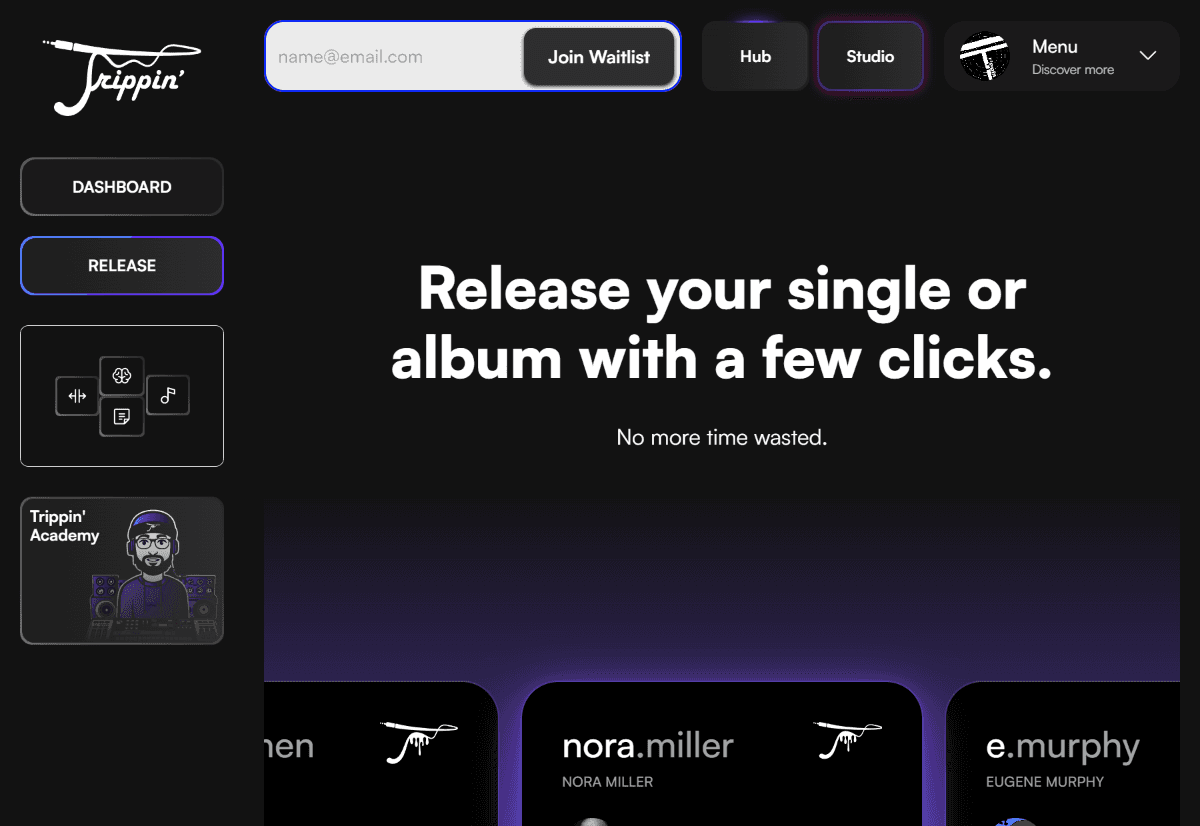
Why this version?
This final iteration strikes a perfect balance between user-centered design and our distinctive "trippy" brand identity. It closely mirrors the upcoming platform, giving users a clear preview of what to expect, and our test groups responded with overwhelmingly positive feedback.
Time to Reflect
The main question that guides my day, how can I be better than yesterday?
Key Learnings & What I Can Teach Others
Throughout this project, I learned that iterative design and constant feedback are the keys to creating a product that truly resonates with users. Balancing a unique brand identity with an intuitive user experience requires deep collaboration between design, development, and stakeholders. I discovered the power of integrating structured frameworks—like MoSCoW for feature prioritization and the Eisenhower Matrix for task management—to maintain focus and clarity. What I can teach others is how to embed user research at every stage of the process, foster a culture of cross-disciplinary collaboration, and build robust design systems that ensure consistency and scalability. These principles not only shaped Trippin’ Audio but are essential for anyone aiming to create innovative, user-centric products.